
Greyhound Betting Strategy
 Available in US
Form reading, track knowledge, and staking discipline for the serious UK punter
Why Greyhound Betting Rewards a Different Kind of Thinking
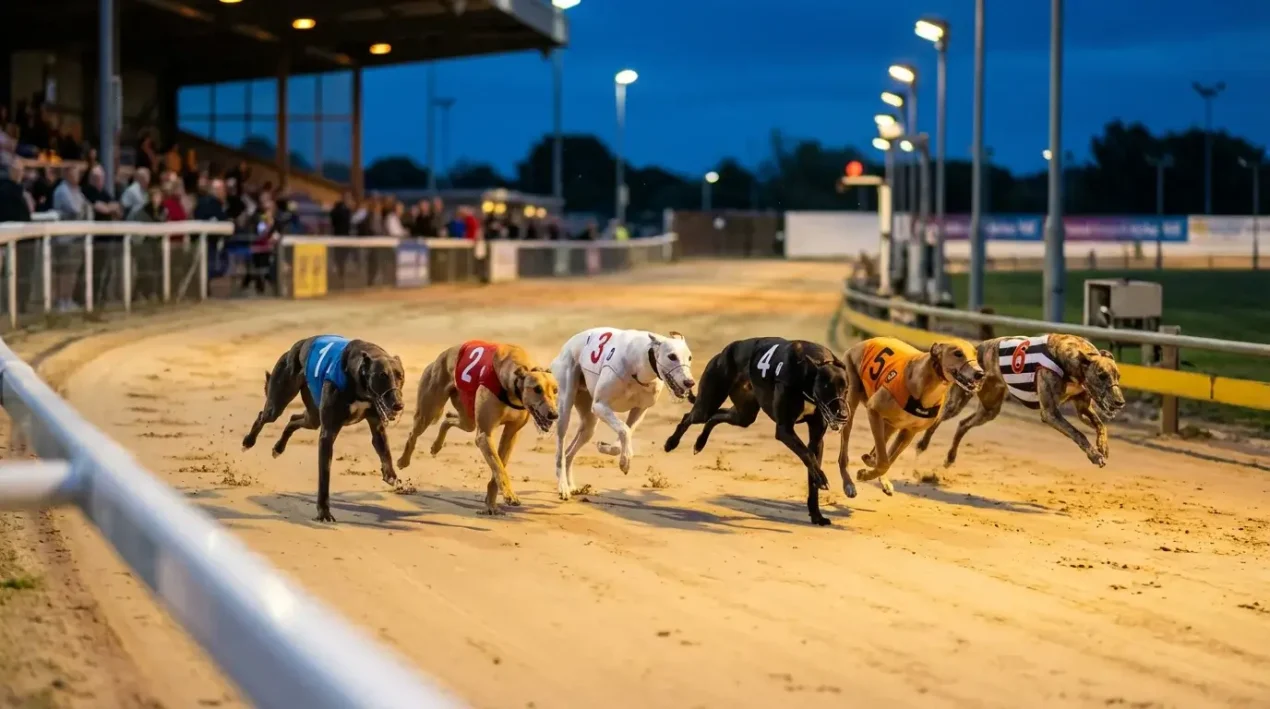
Six dogs, thirty seconds, and a mechanical hare — but the punter who treats this as random is already losing. Greyhound betting operates under conditions that horse racing never replicates and football cannot approximate. The fixed field of six runners creates a bounded probability space. The home-track grading system means most dogs race repeatedly at the same venue against familiar opposition. The 30-second race duration compresses the action into a format where early positioning and bend-work decide outcomes before the home straight even begins. These aren't minor differences — they're structural features that create exploitable patterns for anyone willing to study them.
The UK greyhound racing industry runs across 18 licensed GBGB tracks, from Romford's tight 350-metre circuit to Towcester's sweeping 420-metre course. BAGS meetings — daytime fixtures designed for bookmaker shops — account for the bulk of the racing calendar, with evening meetings drawing live crowds and typically stronger fields. Bookmaker data suggests greyhound racing generates a notable share of their sports betting turnover, a figure that surprises punters who assume the dogs play second fiddle to the horses. Greyhound markets attract consistent action because they offer frequent opportunities — sometimes 80 or more races per day across UK tracks — and because the six-dog format creates pricing inefficiencies that sharper bettors can exploit.
Key Fact: UK greyhound racing operates across 18 licensed GBGB tracks, with the sport contributing a significant share of bookmaker sports betting turnover. The combination of high race frequency and six-dog fields creates a distinct betting environment.
What separates profitable greyhound punters from the rest isn't luck or inside information — it's a systematic approach to form reading, track specialisation, and staking discipline. The punter who understands why Trap 1 at Monmore behaves differently from Trap 1 at Crayford, who recognises the significance of a bitch returning 16 weeks post-season, who can read a race replay and spot the dog that was best despite finishing third — that punter holds edges the casual bettor never sees. This guide is designed as a tactical framework, not a tips sheet. It won't promise systems that guarantee profit, because no such system exists. What it offers is a structured methodology for analysing greyhound racing in a way that creates genuine advantages over the market. The dogs don't know the odds. The punter who understands them properly can make that ignorance work in their favour.
Reading Greyhound Form: Beyond the Racecard Numbers
The racecard tells you what happened; your job is to figure out why. A string of form figures — 111, 432, 665 — reduces a complex athletic performance to a single digit. That compression loses information. The dog that finished first may have had an uncontested lead from a perfect trap draw. The dog that finished sixth may have been checked at the first bend, recovered ground through the back straight, and closed fast against the pace. Both outcomes get recorded, but only one tells you anything useful about what might happen next.
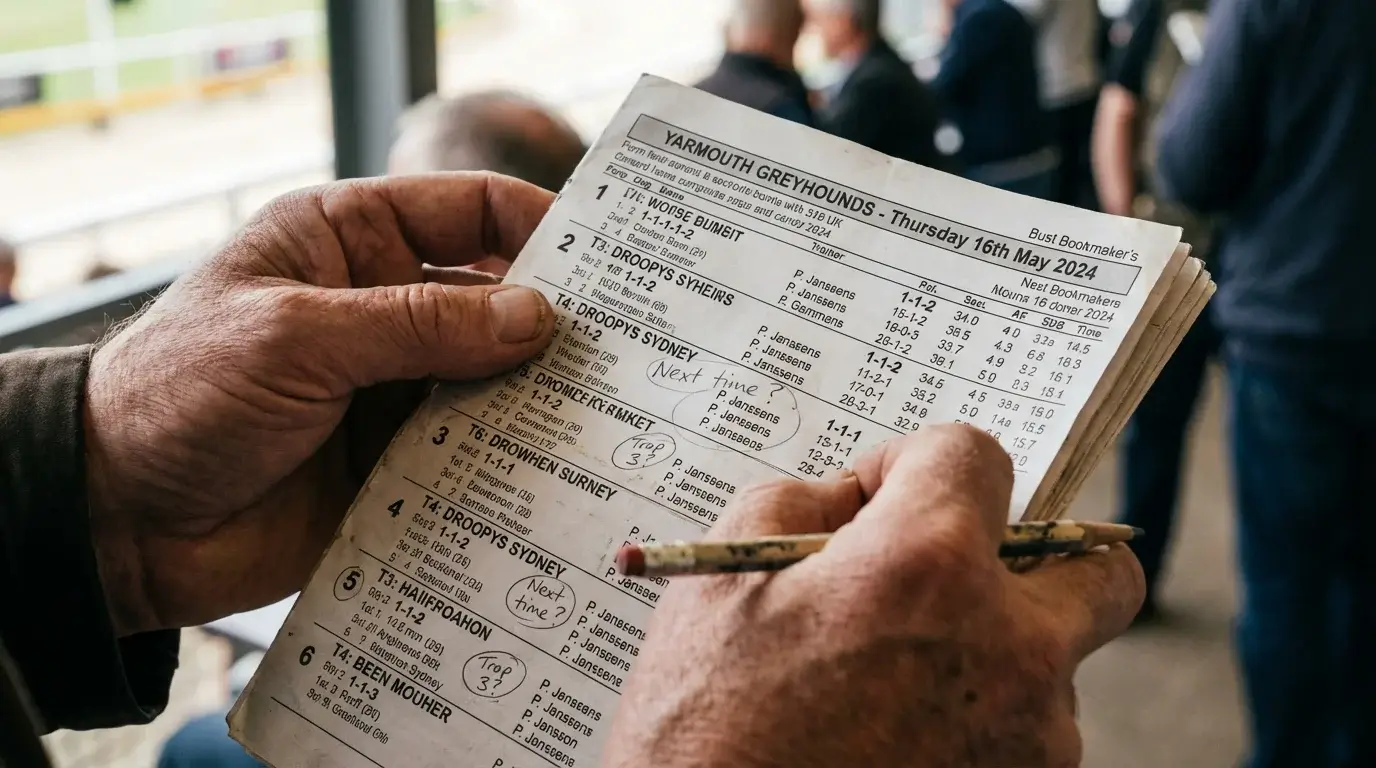
Greyhound form reading starts with understanding what the racecard actually contains. Each entry provides the dog's name, trainer, weight, recent form figures, best time at the distance, sectional times where available, and race comments from the previous runs. The form figures read left to right, most recent first, with numbers indicating finishing position and letters indicating specific events: F for fell, D for disqualified, M for moved up after a dead heat. Some cards include Bertillon notation — a coded system of physical identifiers that historically helped distinguish individual dogs — though this matters more to track officials than bettors.
Sectional time — the recorded time for a specific portion of the race, typically the first segment to the first bend, allowing punters to assess early pace and trap break quality independent of the finishing time.
Sectional times deserve particular attention because they expose what the finishing time conceals. A dog that posts a 17.45-second finishing time might have run a 4.20 sectional to the first bend or a 4.40 sectional. That 0.20-second difference translates to roughly two lengths at the first bend — often the margin between leading comfortably and racing into traffic. Sectional comparison only works within the same track and distance, because the measurement points vary between venues. A 4.20 sectional at Romford measures something different from a 4.20 at Nottingham. The smart approach treats sectionals as relative indicators within a specific context, not absolute measures of quality.
Form comments add narrative context that numbers strip away. Phrases like "crowded first bend," "checked halfway," or "hampered by faller" indicate trouble in running — excuses that may or may not justify the finishing position. The problem is that comments come from track officials with varying levels of detail and consistency. Some tracks provide granular running commentaries; others reduce every bit of interference to "bumped." Reading between the lines requires cross-referencing the comment with the actual race replay, where available. A dog described as "slowly away" that still managed to lead at the first bend wasn't really slow — the comment suggests a poor break that the dog overcame. A dog described as "led to third bend" that finished fifth gives you a pace profile: front runner that doesn't stay the trip.
The grade of a race shapes how you interpret the form within it. UK greyhound racing uses a system from A1 to A11 or A12 (depending on the track), with A1 representing the fastest dogs and the lowest grades the slowest, plus open races that sit outside the graded structure. A dog winning at A6 grade demonstrates something different from a dog winning an open race. Grade drops — where a dog moves down from A4 to A5, for example — often signal a trainer's admission that the dog wasn't competing at its proper level. Grade rises following victories can create the opposite scenario: a dog promoted above its class, vulnerable in its next outing. Tracking a dog's grade trajectory over six or eight runs tells you whether it's improving, declining, or stuck at its true level.
Raw form figures and race-read form are not the same thing. Raw form is what the card shows: 321, 254, 116. Race-read form is what actually happened: the 3 was a box-to-wire leader caught late by two closers; the 2 came from last after a bad break; the 5 got baulked twice and still made ground. The punter who understands the context behind each digit builds a genuine picture of what each dog is capable of when things go right.
What the Trap Draw Tells You About Race Shape
Trap 1 and Trap 6 don't just differ by five lanes — they differ by probability. The inside trap offers the shortest route to the first bend on every UK circuit, creating a systematic advantage for early-pace dogs drawn on the rail. Statistical data across UK tracks shows Trap 1 winning more frequently than the expected 16.67 percent in a six-dog field, though the magnitude varies by venue. Trap 6 typically underperforms expectation, particularly on tighter circuits where wide runners have to cover extra ground and risk being squeezed at the opening turn.
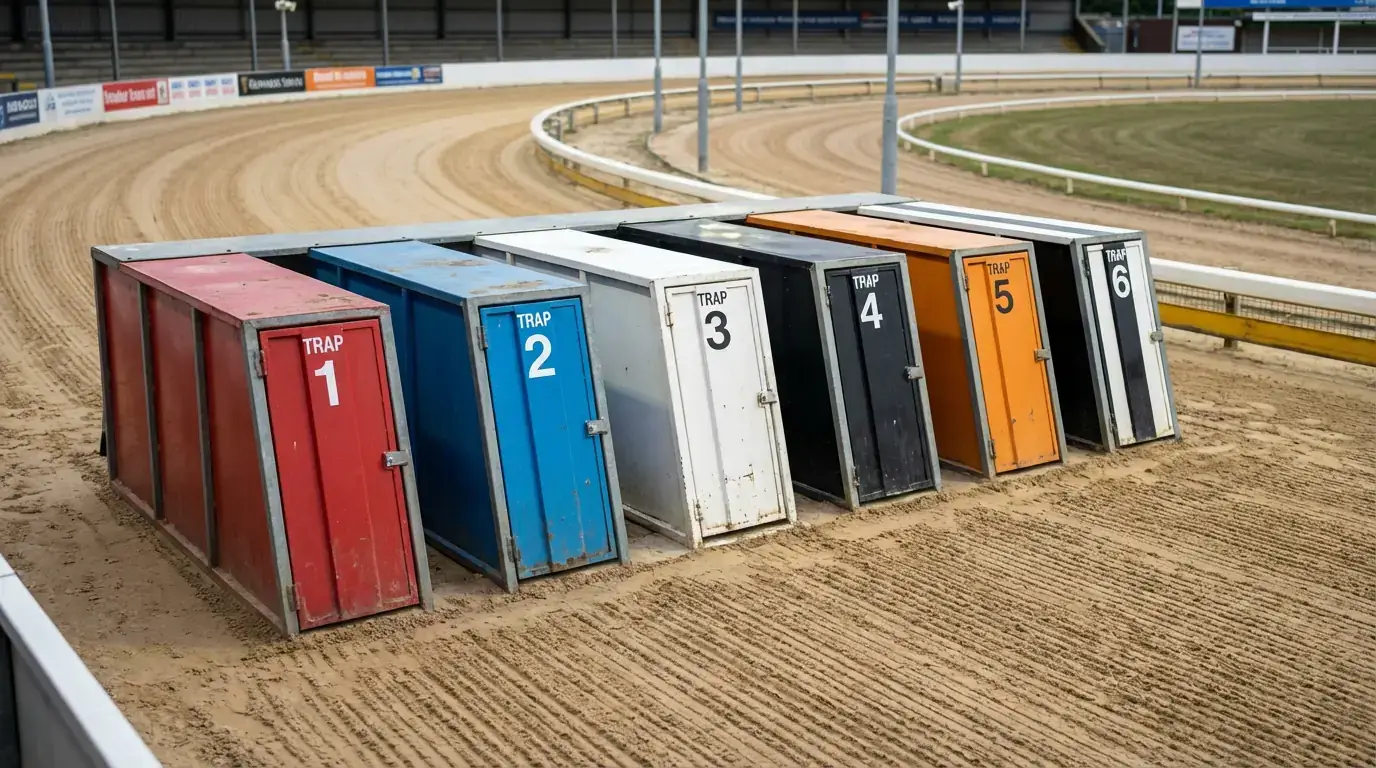
But raw trap statistics only tell part of the story. What matters more is how the trap draw interacts with each dog's running style. A confirmed railer — a dog that naturally runs close to the inside rail — drawn in Trap 6 faces an immediate problem: it needs to cross traffic to reach its preferred racing line, losing lengths and often getting bumped in the process. Conversely, a wide runner drawn in Trap 1 will either break outward across the field or find itself trapped on the rail with no room to stride out. Neither scenario favours the dog.
Race shape emerges from the combination of trap draws and running styles across all six dogs in the field. When two confirmed front runners are drawn in adjacent traps, early pace pressure becomes inevitable — both will commit to making the lead, potentially taking each other on while a closer sneaks through inside. When the main early-pace dog draws Trap 6 and the closers draw inside, the front runner has a longer path to the lead while the patient dogs can track the pace without covering extra ground. The seeding system at UK tracks attempts to separate dogs of similar style, but trainers can and do manipulate trap preferences, and the system doesn't always prevent pace conflicts.
Reading the trap draw is reading the probable race before it happens. Not every race unfolds as anticipated, but understanding how draw and style interact allows you to construct a mental model of likely first-bend scenarios — and price your selections accordingly.
Using Race Replays to Read What the Form Figures Miss
Form figures record the finish — replays expose the journey. The single most overlooked resource in greyhound betting is the race replay, available free on most track websites and through services like RPGTV. A two-minute video contains more actionable information than the entire racecard for the dogs involved, yet most punters never watch.
Replay analysis works best in passes. On the first viewing, focus on the break and the first bend. Which dogs got away cleanly? Which lost ground at the boxes? Was there contact or crowding at the first turn? The outcome of the first bend often determines the finishing order — front runners that lead through the first bend rarely surrender that lead. On the second viewing, watch the midrace traffic. Where did the running room appear? Which dogs had to check stride or take evasive action? Which ones found gaps and accelerated through them?
Dogs that lead at the first bend win a significant proportion of UK graded races — making early pace and trap break quality among the most predictive factors in greyhound form analysis.
On the third viewing, concentrate on the home straight. Finishing effort separates dogs with something left from dogs that emptied early. A dog that gains three lengths in the final 50 metres may have been boxed in throughout — that's harder to replicate. A dog that gains three lengths because it stays the distance better than the leaders — that's a repeatable trait. Watch for visual evidence that contradicts the official race comments. If the card says "checked halfway" but the replay shows nothing more than a slight brush, you've found an oversold excuse. If the card says nothing and the replay shows your selection getting baulked twice, you've found value the market likely ignored.
Replays also reveal running style more clearly than any written description. You can see whether a dog is a natural railer that hugs the inside line even when drawn wide, or a strider that needs room to stretch out. You can see whether a closer comes with one sustained run or accelerates in bursts. This intelligence directly informs trap draw analysis — you'll know which draw a dog needs rather than relying on generalised assumptions.
Track Knowledge: The Edge Most Punters Ignore
The punter who knows one track cold will outperform the one who dabbles at twenty. Track specialisation matters in greyhound racing because every venue has distinct characteristics that shape race outcomes. Circumference, bend sharpness, distance configurations, sand depth, and even the positioning of the winning line create track-specific biases that remain consistent over time. The punter who understands these biases can identify when a dog is suited to a particular venue — and when it isn't.
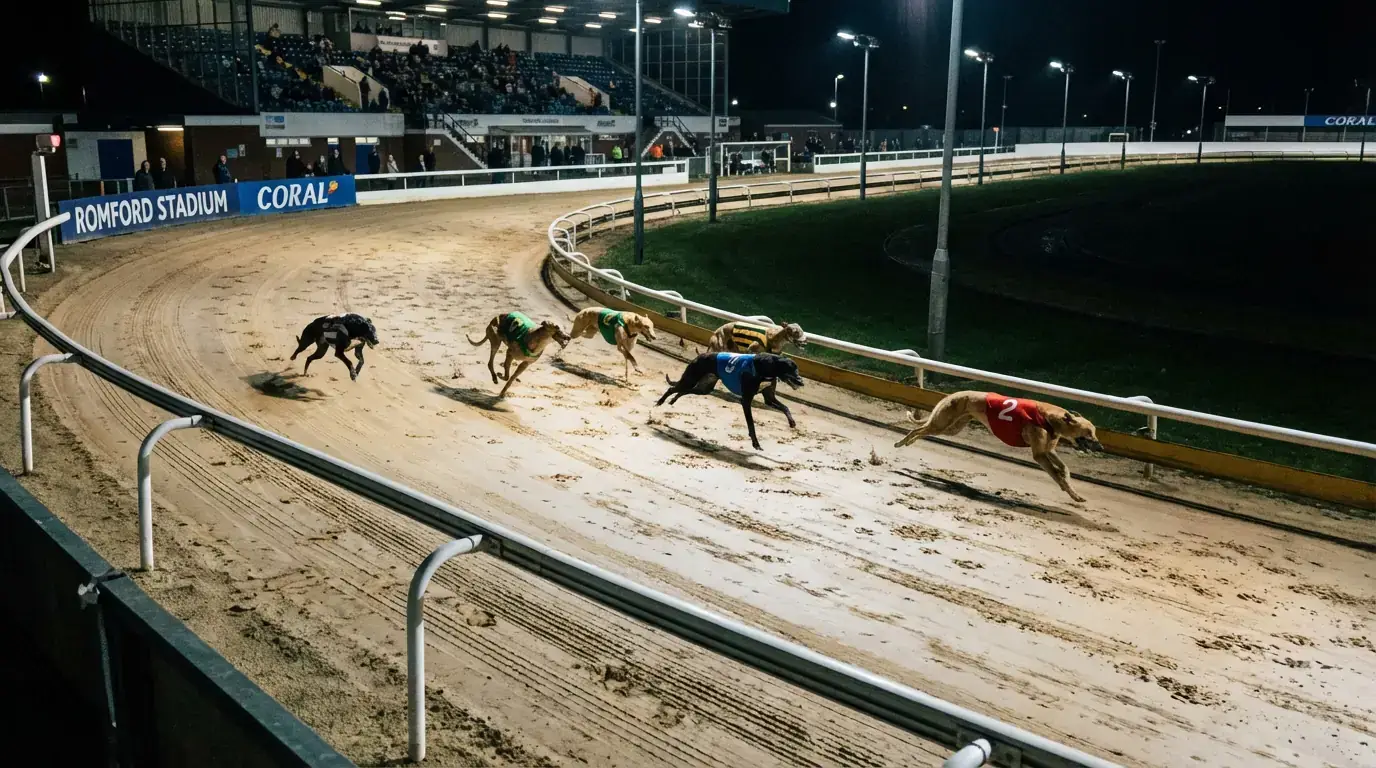
Start with the physical layout. UK tracks range from tight circuits like Romford, where the bends come quickly and early pace dogs hold an outsized advantage, to galloping tracks like Towcester, where the sweeping turns allow wide runners to stay competitive and stayers to impose themselves. The number of bends matters: standard four-bend races differ tactically from six-bend marathon trips. Even the position of the winning line affects interpretation — at Nottingham, the finish is closer to the first bend than at most tracks, which changes how sectional times translate to final positions.
Sprint Races
Under 300m. Trap break and early pace dominate. Wide runners struggle on tight bends. Sectional times matter most.
Middle-Distance
400-500m standard trips. Balance of pace and stamina. Race shape develops; closers have more opportunity.
Stayers Races
600m and beyond. Stamina becomes decisive. Early leaders often fade; sustained pace beats raw speed.
Distance categories interact with track layouts to produce specific form patterns. A sprint specialist that dominates at Romford over 225 metres may struggle over 380 metres at the same track — the extra distance allows rivals to close ground that the shorter trip protected. Conversely, a dog with a stamina profile that runs consistently at Crayford over 540 metres might find Sunderland's 450-metre trips too sharp for its running style. Knowing which distance category a dog truly belongs to helps identify when it's racing at its optimal trip versus when it's compromising.
Weather conditions add another variable that track knowledge helps interpret. Rain affects sand tracks differently depending on drainage systems and sand composition. Some tracks develop pronounced inside-rail bias when wet, because the rail line drains faster than the outside. Other tracks become more neutral or even favour wide runners when the surface holds moisture. Monitoring track condition reports before racing — available on official GBGB channels and updated for each 2026 meeting — gives you information that occasional bettors ignore. If you specialise at Monmore and understand how a wet surface there typically shifts trap bias inward by several percentage points, you're pricing races with better information than the broader market.
BAGS meetings and evening fixtures behave differently at the same track. BAGS racing fills cards throughout the day with lower-grade dogs running faster turnaround times; evening meetings typically attract stronger fields with more open-race opportunities. The types of dogs and competitiveness of fields differ between these meeting types. Specialising in one track means understanding its full racing calendar, not just cherry-picking the Saturday evening feature cards.
Choosing Your Bet Type: What Works for Greyhound Racing
Not every bet type suits every race — and greyhound racing punishes lazy selection. The six-dog field structure creates different value dynamics compared to horse racing, where 12 to 20-runner fields are common. Fewer competitors means easier probability assessment but also tighter margins. Forecast and tricast bets become more attractive because you're predicting outcomes from a constrained set. Accumulator risk increases because the short-field hit rate required to land multiples isn't as favourable as it might initially appear.
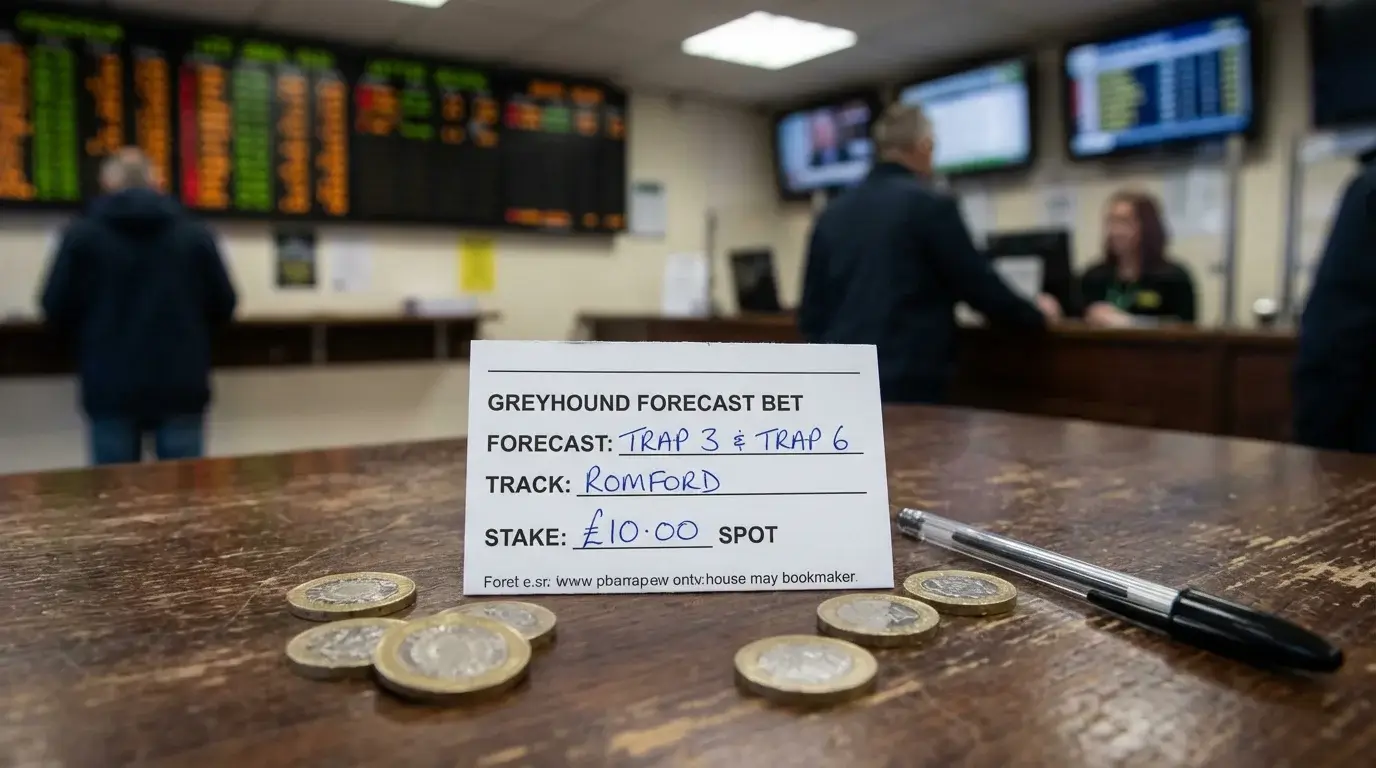
The win single remains the foundation of greyhound betting. You're backing one dog to finish first, either at starting price or at a fixed price taken before the off. Starting price betting surrenders control — you accept whatever odds the market settles at, which may be shorter or longer than when you assessed the race. Fixed-odds betting locks in your price but foregoes any drift. Best Odds Guaranteed offers, available at most major bookmakers for greyhound racing, provide a middle ground: take a fixed price and receive the SP if it's higher. This protection makes fixed-odds betting almost always preferable when BOG applies.
Place betting and each-way betting work differently in greyhound racing than in larger-field sports. Standard place terms pay on first and second at one-quarter the win odds. Each-way betting is two separate bets — a win stake and a place stake — which means you're outlaying twice the displayed unit. The breakeven calculation for each-way depends on the odds: at 4/1, you need roughly even probability of winning and placing second to break even on the place portion alone. Below 4/1, each-way frequently destroys value because the place odds are too compressed. Above 4/1, each-way can protect a selection you fancy for the frame but don't trust to win outright.
Forecast Bet Example: Romford 19:45
Dog A (Trap 1): 5/2
Dog B (Trap 4): 7/2
Straight Forecast (A to beat B): £1 stake → £24.80 return
Computer Straight Forecast dividends are calculated by Tote based on pool betting, not fixed odds — actual returns will vary.
Forecast betting suits greyhound racing because the small fields reduce the number of possible first-and-second combinations. With six runners, there are 30 possible straight forecast outcomes. If you can confidently identify the two dogs most likely to fill the first two positions, you're tackling a much narrower probability space than in a 16-runner horse race (240 possible outcomes). Reverse forecasts cover both orders of your two selections — Dog A first, Dog B second or vice versa — at a combined stake that's essentially two straight forecasts.
Tricast betting extends the prediction to the first three finishers in exact order. With six dogs, there are 120 possible tricast outcomes. The payouts can be substantial — three-figure returns from single-pound stakes aren't unusual — but the strike rate is correspondingly low. Combination tricasts cover all six possible orders of your three selections, requiring a six-unit stake that tempers the volatility but also dilutes the returns. Tricast betting makes sense when you have a strong opinion on multiple dogs in the same race and want to leverage that conviction into larger payouts than singles would provide.
Accumulators carry compounded risk that greyhound fields amplify rather than reduce. Each leg of a six-dog field needs to land; stringing four 2/1 shots together drops the combined probability below 2 percent. The attractive headline odds on accumulators mask the bookmaker margin compounding with each leg. Occasional doubles or trebles where you have strong opinions can be justified; daily accumulators built from volume without conviction are a reliable path to long-term losses.
Staking Systems for Greyhound Betting
A staking system without an edge is just a creative way to lose money. This point matters more in greyhound betting than in most sports because the temptation to apply mechanical staking plans is stronger here. The high frequency of races — 80 or more per day across UK tracks — creates opportunities to implement systematic approaches, and plenty of punters convince themselves that the right staking formula can transform marginal selections into profitable ones. It can't. Staking amplifies or dampens an existing edge; it doesn't create one.
Level staking is the simplest approach: bet the same fixed amount on every selection regardless of odds or confidence. If you stake £10 per bet across 100 bets with a 10 percent edge, your expected profit is £100 plus whatever edge generates. Level staking protects you from catastrophic sequences because no single loss exceeds your standard unit. The downside is that you're treating all bets equally when some genuinely do offer better value than others. A selection at 5/1 that you believe should be 3/1 is a stronger proposition than a selection at 2/1 that you believe should be evens — but level staking weights them identically.
Proportional staking adjusts stakes to odds so that a winning bet returns roughly the same profit regardless of the price. Backing a 4/1 shot at one unit and a 2/1 shot at two units aims to equalise returns across different selections. The logic is that your edge exists at the probability level, not the odds level, so your stakes should reflect the payout structure. In practice, proportional staking increases exposure to short-priced selections, which can accelerate losses during a bad run on favourites.
Level Staking
Fixed unit on every bet. Simple, disciplined, protects against variance. Treats all bets equally, which may underweight high-value plays.
Dutching
Stakes distributed across multiple selections to guarantee equal profit if any one wins. Reduces volatility but requires accurate odds assessment.
Progressive staking systems — Martingale, Fibonacci, Labouchere — attempt to recover losses by increasing stakes after losers. The Martingale doubles the stake after each loss, theoretically guaranteeing that the first winner recovers all previous losses plus one unit profit. The mathematics work perfectly in theory. In practice, losing sequences in greyhound betting are common enough that progressive systems can escalate stakes beyond your bankroll or bookmaker limits before a winner arrives. A run of eight consecutive losers requires the ninth bet to be 256 times your starting stake — and eight-loss sequences are not rare events when even short-priced favourites lose half the time.
Fibonacci staking follows the sequence where each number is the sum of the two preceding numbers: 1, 1, 2, 3, 5, 8, 13, and so on. After a loss, you move up the sequence; after a win, you move back two steps. The progression is less aggressive than Martingale but still exposes you to escalating stakes during bad runs. Neither system addresses the fundamental issue: if your selections don't have positive expected value, no staking adjustment will make them profitable.
Bankroll management overlays any staking approach. The consensus among serious bettors is that no single bet should risk more than 1 to 2 percent of your total bankroll. At 1 percent maximum stakes, a 20-loss sequence — statistically inevitable at some point — costs you 20 percent of your bank rather than wiping you out. This discipline feels conservative when you're running well and essential when you're not.
How Dutching Works in Six-Dog Fields
Six runners means fewer combinations — and that's exactly where Dutching thrives. Dutching is the practice of backing multiple selections in the same race with stake sizes calibrated to return the same profit regardless of which selection wins. In a six-dog field, you might Dutch two or three dogs, spreading your risk across a subset of the field while targeting a positive return if any of your selections lands first.
The calculation is straightforward. Convert each selection's odds to implied probability by dividing 1 by the decimal odds. Add those probabilities together. If the combined probability of your selections exceeds the sum of their implied probabilities, you have potential value. Then divide your total stake proportionally based on each dog's odds — the shorter-priced selection receives more stake because it needs to return the same profit from a smaller multiplier.
In practice, Dutching two selections at 3/1 and 5/1 requires staking roughly 62.5 percent of your total on the 3/1 shot and 37.5 percent on the 5/1 shot to equalise returns. If the 3/1 wins, you collect four units from your 2.5-unit stake minus the 1.5 units lost on the other leg — netting 2.5 units. If the 5/1 wins, you collect nine units from your 1.5-unit stake minus the 2.5 units lost on the other leg — also netting 2.5 units.
Dutching works best in competitive fields where no single dog stands out as the obvious favourite. When the market is tight — say, a 5/2 favourite with three dogs between 3/1 and 5/1 — the opportunity to back two or three contenders and guarantee profit if any wins becomes realistic. In markets with a dominant 4/6 favourite, Dutching the outsiders rarely offers value because their combined prices still don't overcome the favourite's probability.
Interactive Tool
Correct Dutching Split Calculator, and Favourite Implied Odds
Get the exact stake split that actually equalises returns, and see the average odds hiding behind the 80p-per-pound favourite return.
Correct Split (3/1 shot)
-
-
Split (5/1 shot)
-
Guide's Figure
-
Guide's Return Gap
-
What this guide gets wrong: "Dutching two selections at 3/1 and 5/1 requires staking roughly 62.5 percent of your total on the 3/1 shot and 37.5 percent on the 5/1 shot to equalise returns." Checking the maths: at 62.5%/37.5%, the two legs return £2.50 and £2.25 per £4 staked — not equal. The correct split is 60% / 40%, which returns exactly £2.40 either way.
Implied Average Odds
-
-
Win Rate
-
Return per £1
-
Fractional Equiv.
-
What this guide leaves as two unconnected facts: "favourites win roughly 30 to 35 percent of races while returning around 80 pence per pound staked long-term." The implied average price is never calculated — it works out to roughly 2.46 decimal (about 1.46/1 fractional), well inside the 4/6 to 6/4 range most greyhound favourites actually trade at.
Form reading and staking build your toolkit — exchange betting changes where you deploy it.
Exchange Betting and Lay Strategies
The exchange doesn't care whether a dog wins — it cares whether the market has it priced correctly. Betting exchanges like Betfair fundamentally change what's possible in greyhound betting by introducing lay betting: the ability to bet against a dog winning. Traditional bookmakers only let you back selections to win or place. On an exchange, you can oppose any dog in the field, acting as the bookmaker and accepting the backer's stake in exchange for taking on the liability if that dog wins.
Lay betting logic differs from backing logic. When you back a 3/1 shot, you risk your stake to win three times that amount. When you lay a 3/1 shot, you risk three times the backer's stake to win the stake itself. Short-priced lays carry lower liability — laying a 2/1 shot means risking twice the backer's stake, a manageable exposure. Laying a 10/1 shot means risking ten times the backer's stake for single-unit profit, making the slightest misjudgement dangerous.
The primary lay strategy in greyhound racing targets vulnerable favourites. Not every favourite deserves its price. Dogs that are short in the market because they won their last race — regardless of how weak the form line was — often attract blind money that pushes their price below fair value. Dogs promoted in grade, facing stronger opposition than they've encountered before, regularly trade shorter than their probability warrants. Dogs returning from layoff, whose sharpness and race fitness are unknown quantities, frequently go off at prices that assume their pre-break form remains intact. Identifying when market support outstrips actual win probability creates lay opportunities.
Pre-race trading extends the toolkit beyond simple back and lay positions. Greyhound markets on Betfair typically see most liquidity in the final few minutes before the off. Prices can move substantially as late money arrives — often following trackside information about trap draws, dog behaviour, or market confidence. Traders who back early at longer prices can lay shorter as the market moves, locking in profit regardless of the race outcome. This "greening up" requires timing and liquidity awareness but removes race result uncertainty entirely.
Exchange betting carries costs that bookmaker betting doesn't. Betfair charges commission on net winnings, typically around 5 percent base rate in the UK, with an additional "Expert Fee" of 20 to 40 percent applying to accounts with rolling 52-week gross profits exceeding £25,000. That commission structure erodes margins significantly on frequent small-edge plays. A lay strategy that wins 70 percent of the time at 0.5/1 liability looks profitable on paper but nets only marginal returns after commission. Calculating true expected value for exchange plays must account for commission — many strategies that appear edge-positive before commission become neutral or negative once fees are deducted.
Automation tools like Bet Angel and Gruss allow systematic approaches to exchange betting. These platforms enable rule-based betting that triggers automatically when specified conditions are met — for example, laying every favourite under 2.5 at a particular track when trap bias data suggests the rail dog is overbet. Automation scales analysis across multiple meetings but requires careful parameter-setting and ongoing review. The market adapts to systematic strategies over time, meaning edges that automation exploits can compress or disappear.
Advanced Angles: Trainer Form, Season Dates, and Grade Drops
The best greyhound angles aren't hidden — they're sitting on the racecard in plain sight. Most punters focus on the dogs; sharper bettors track the patterns around the dogs. Trainer form, bitch season cycles, and grade movements offer predictive value that raw finishing positions miss. None of these angles guarantees winners, but each provides context that shifts probability assessments meaningfully.
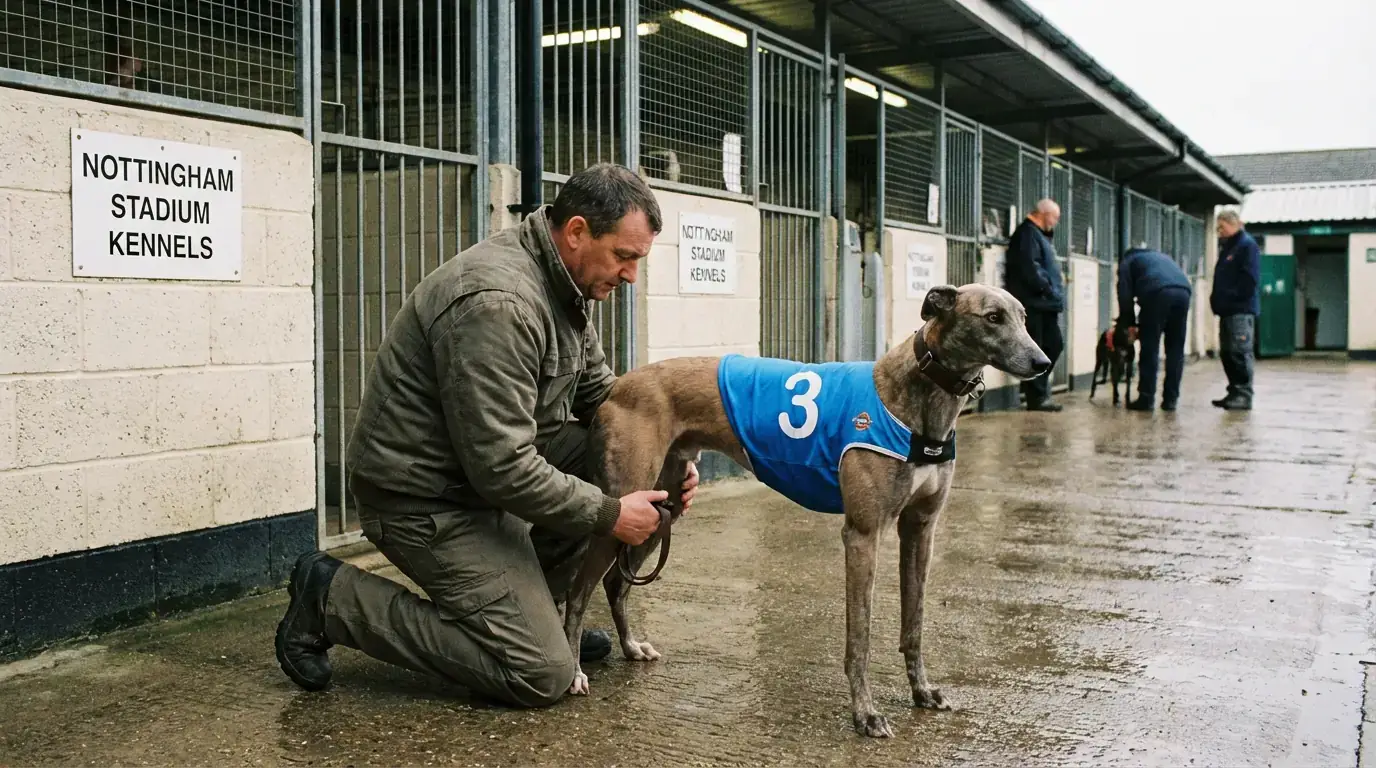
Trainer Form
Kennels run hot and cold in cycles. A trainer with five winners from 20 runners in the past week is sending out dogs that are fit, well-prepared, and likely to run their form. Bet when the kennel is peaking.
Season Dates
Bitches return from their mandatory stand-down on a predictable schedule. The 16-week window post-season marks peak return to form. Track season dates on your shortlist dogs.
Grade Drops
A drop in grade often signals genuine improvement opportunity. Dogs coming down from A4 to A5 face weaker opposition; back them if the form suggests they've simply been outclassed at the higher level.
Trainer form reflects preparation quality and kennel condition in ways that individual dog form doesn't capture. When a trainer's dogs are winning at above their usual strike rate, it typically indicates the kennel is running well — feed, fitness, and timing are aligned. Trainers at UK tracks tend to have concentrated pools of dogs racing regularly at their home venue. Tracking which trainers are in form at your specialised track adds confidence to selections from those kennels. Conversely, trainers going through a losing run might have underlying issues that make their entries riskier propositions.
Bitch season dates represent one of the most underused public data points in greyhound racing. Female greyhounds come into season typically once or twice a year (frequency varies by individual), requiring a mandatory stand-down of at least 21 days under GBGB Rule 56. The return from season follows a predictable pattern: initial races often show rustiness, followed by a gradual return to form, peaking around 16 weeks post-season. Dogs racing within that 16-week window, particularly between weeks 10 and 16, frequently show improved performances as their physical condition optimises. Season dates appear on racecards and in form databases for any punter willing to look.
Grade movements signal trainer and handicapper assessments of a dog's true level. When a dog drops in grade — moving from A4 to A5, for example — the implication is that it wasn't competitive at the higher level. But the betting interpretation isn't straightforward. If the dog was competitive at A4 and unlucky not to win, the grade drop puts it against weaker opposition where its class should tell. If the dog genuinely couldn't cope at A4, the drop may not be enough. Distinguishing between hard-luck grade drops and genuine declines requires going back to replay analysis and understanding why the dog was dropped. The GBGB's grading regulations maintain the established A1-A11 structure at most tracks, making these patterns consistent with historical data. Grade rises after victories create the opposite scenario: a dog promoted to face stronger fields for the first time, where its current price may overestimate its chance.
How to Track Trainer and Kennel Form
A trainer in form is the closest thing greyhound racing has to a leading indicator. Racing Post's greyhound section provides trainer statistics including recent winners, strike rate, and profit/loss figures to level stakes. Timeform offers more detailed kennel analysis for subscribers. GBGB's official results database allows filtering by trainer at individual tracks, though the interface requires patience.
Building your own tracking system doesn't require sophisticated software. A simple spreadsheet logging trainer, track, date, runner, and result creates a personal database over time. After a few weeks of logging, patterns emerge: which trainers consistently place at your chosen track, which ones perform better with sprinters versus stayers, which ones show improvement with dogs after a break. The discipline of recording forces attention to information that casual viewing misses.
Look for clusters of performance rather than isolated results. A trainer sending out four winners from ten runners over a fortnight signals something meaningful. A trainer going 0-for-20 over the same period suggests temporary issues. Neither streak lasts forever, but betting with the current trend rather than against it adds percentage points to your edge. Trainers at UK tracks often have particular strengths — some excel with young dogs, others with veterans, some with specific distance categories. Identifying and tracking these tendencies deepens your understanding of each entry's realistic chance.
Bitch Season Dates and the 16-Week Window
Sixteen weeks after her season date — mark it in your notes. Female greyhounds experience hormonal cycles that affect performance in predictable ways. The mandatory three-week stand-down when a bitch comes into season represents the minimum absence; many trainers allow longer recovery time. The first few races back often show a dog still finding her feet, sometimes running below her previous level. But the trajectory from that point is typically upward.
The 16-week window represents the period where most bitches return to, and often exceed, their pre-season form. Hormonal stability, restored muscle condition, and renewed racing sharpness combine during this phase. Punters who track season dates can identify when a bitch is entering her peak window and weigh assessments accordingly. A bitch showing improved runs at 12-14 weeks post-season is likely to continue improving through week 16.
Finding season dates requires checking form records for the stand-down period. Racing Post's greyhound database shows gaps in racing history; a three-week or longer absence followed by gradual improvement usually indicates a season layoff. Some databases explicitly note season dates. Once you've identified the date, simple arithmetic tells you where the dog sits in her recovery cycle for any upcoming race. This information is public but underweighted by casual punters who focus only on recent results without context. The 16-week angle offers genuine edge precisely because most of the market ignores it.
Mistakes That Empty a Greyhound Betting Bank
The market doesn't punish ignorance slowly — it punishes it race by race. Greyhound betting offers frequent opportunities to lose money in ways that seem reasonable at the time. The same structural features that create edge for educated punters — high race frequency, small fields, predictable patterns — also create traps for punters who approach the sport without discipline or understanding.
Blind favourite backing tops the list. The logic feels sound: favourites win more often than any other individual dog, so backing them should work over time. But bookmaker margins ensure that favourites are systematically overbet. Across UK greyhound racing, favourites win roughly 30 to 35 percent of races while returning around 80 pence per pound staked long-term. The casual punter who backs every favourite bleeds money at a slow but consistent rate, convinced each losing run is just variance that will correct.
Ignoring the trap draw destroys value that proper analysis would have captured. A punter who backs a railer drawn in Trap 6 without adjusting their assessment is working with incomplete information. A punter who backs a front runner from Trap 4 into a field with two faster break dogs drawn inside hasn't thought through the race shape. Trap draw isn't everything, but treating it as nothing is an expensive mistake.
WARNING
Chasing losses with progressive staking after a bad session is the single fastest way to destroy a betting bank. Martingale doubling turns a 10-race losing streak — which happens to every punter eventually — into an account-ending catastrophe.
Chasing losses turns bad sessions into disasters. The instinct after a losing run is to increase stakes to recover quickly. This instinct is financially suicidal. Progressive staking systems like Martingale formalise the chase into a structure that feels systematic but merely accelerates the inevitable. A losing streak of sufficient length — and sufficient length is shorter than most punters imagine — wipes out any bankroll under progressive stakes. The punter who accepts that losing sessions happen, records them, analyses what went wrong, and moves on with unchanged stakes survives. The punter who doubles up to recover doesn't.
Overcomplicating with exotic bets drains bankrolls through poor strike rates and inflated margins. Tricast bets and combination forecasts offer eye-catching payouts precisely because they rarely land. The bookmaker margin on exotic bets significantly exceeds the margin on singles. A combination tricast at £6 stake that lands once in 40 attempts at an average £150 return is a losing proposition long-term. Exotic bets have their place, but treating them as primary betting vehicles rather than occasional supplements is a proven path to loss.
No bankroll discipline underpins most other mistakes. Without a defined bank, a maximum stake rule, and stop-loss triggers, every session becomes a gamble on whether today's luck holds. The punter who bets what feels right in the moment has no protection against the moments when what feels right is actually catastrophic.
Greyhound Betting: Your Questions Answered
Does trap position really affect which greyhound wins a race?
Yes, trap position creates measurable statistical biases across UK greyhound tracks. Inside traps — particularly Trap 1 and Trap 2 — consistently outperform the expected 16.67 percent win rate in a six-dog field, while outside traps, especially Trap 6, consistently underperform. The magnitude of bias varies by track: tight circuits like Romford show stronger inside-trap advantages than galloping tracks like Towcester. Wet weather typically amplifies inside bias because the rail line drains faster and offers better footing.
However, raw trap statistics don't tell the full story. What matters most is how the trap draw interacts with each dog's running style. A confirmed railer drawn wide faces immediate disadvantages; a wide runner drawn inside may be compromised too. The smart approach cross-references trap position with running style, pace profiles, and track-specific conditions rather than treating trap bias as a standalone betting system.
How do you read a greyhound's form to spot value bets?
Reading greyhound form for value requires separating what happened from why it happened. Start with the racecard data: form figures, sectional times, best time at the distance, and race comments. Form figures show finishing positions; sectional times reveal early pace quality and trap break performance. Comments from track officials note trouble in running, though these vary in reliability and should be cross-referenced with replays.
Value emerges when your race-read assessment differs from the market's assessment. A dog that finished fourth might have been checked twice and still closed ground — that's a better performance than the naked form suggests. A dog that won by three lengths might have faced weak opposition in a slow-run race — that's a worse performance than the market might assume. Grade changes, trainer form, and season dates for bitches add layers of context. The goal is identifying dogs whose true probability of winning exceeds their implied probability in the market — and that comes from understanding context, not just results.
Is there a guaranteed winning system for greyhound betting?
No. Anyone claiming a guaranteed winning system is either deluded or dishonest. Greyhound racing involves genuine uncertainty — dogs get bumped, races unfold unpredictably, and even the best form analysis produces losing selections regularly. No staking system, betting pattern, or secret method overcomes this fundamental reality.
What does exist is the possibility of edge: consistent advantages over the market that produce profit over large sample sizes. Edge comes from superior form analysis, track specialisation, disciplined staking, and selective betting. Punters who achieve long-term profit do so by identifying situations where their probability assessments consistently beat the market's assessments — and by having the bankroll management to survive the inevitable losing runs. Expecting to win every session, or even most sessions, misunderstands how profitable betting works. The target is positive expected value over hundreds or thousands of bets, accepting short-term variance along the way.
The Track Doesn't Owe You a Winner
Every losing slip teaches more than every winning one — if you're paying attention. The punter who reviews defeats without excuses, who asks what the race revealed rather than what luck denied, builds knowledge that compounds over time. The punter who writes off losses as bad luck and celebrates wins as skill accumulates nothing but a shrinking bankroll and an inflated self-image.
Greyhound betting rewards a particular temperament: patient, analytical, comfortable with uncertainty, willing to do work that most bettors skip. Track specialisation demands narrowing focus when the temptation is to chase action across every meeting. Form analysis requires watching replays of races you didn't bet on, building pattern recognition that only pays off weeks or months later. Bankroll discipline means walking away from sessions where no genuine edge exists, even when the cards look tempting. None of this is glamorous. All of it is necessary.
The market aggregates opinion from thousands of participants, many of them wrong, some of them sharper than you. Respecting that collective intelligence while seeking the gaps it leaves is the operating mindset for profitable betting. The market isn't your enemy — it's your benchmark. When your assessments consistently beat the market's assessments, you profit. When they don't, you pay. There's no shortcut to the consistency, no system that replaces understanding, no trick that transforms casual interest into edge.
What this guide offers is a framework, not a formula. Form reading, track knowledge, bet selection, staking discipline, exchange strategy, advanced angles — each component adds percentage points to your long-term expectation if applied correctly. None guarantees that your next bet will win. All increase the probability that your next thousand bets will net positive returns.
The greyhound track doesn't owe you a winner. It doesn't care about your streak, your theory, or your need. The difference is what you bring: the preparation, the analysis, the patience, and the humility to learn from every result. Six dogs, thirty seconds, and a mechanical hare — the punter who understands why that format rewards systematic thinking has already separated from the crowd.
