Greyhound Hurdle Racing: Betting a Niche Market
 Available in US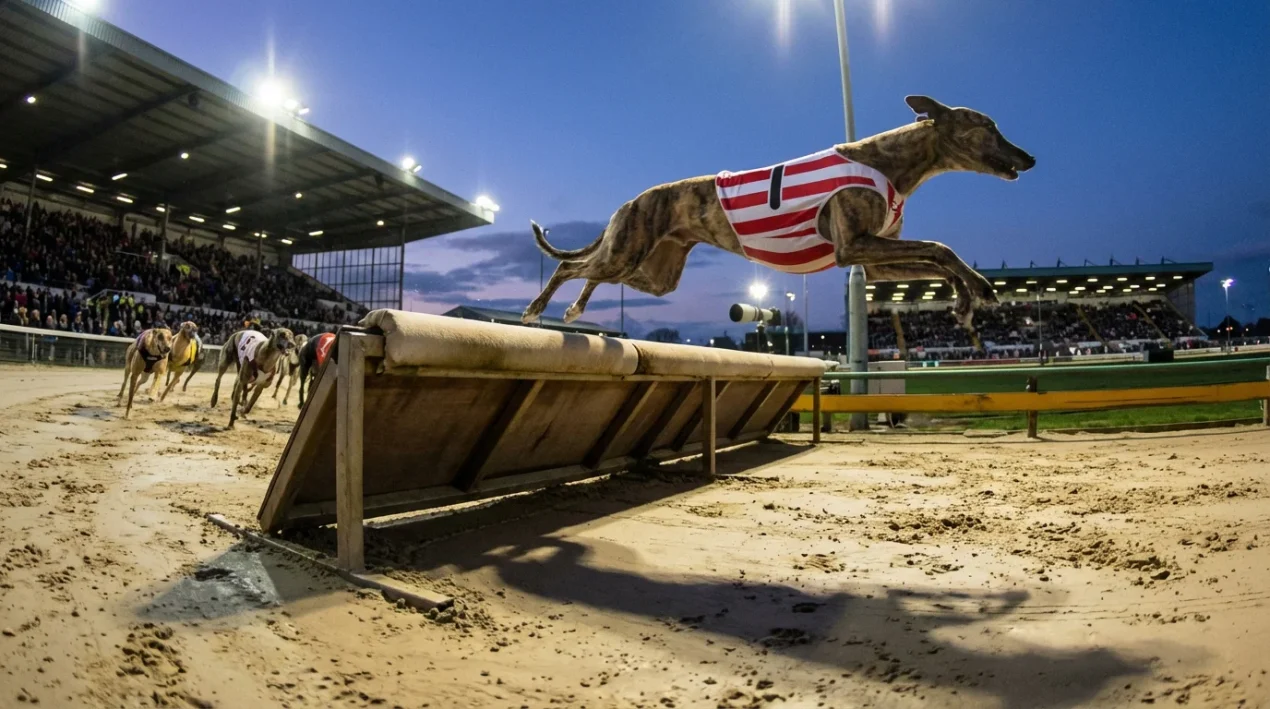
Contents
A Different Test Entirely
Greyhound hurdle racing occupied a small but distinct corner of the UK racing calendar until 2025. Only a handful of tracks staged hurdle events, and the number of dogs trained specifically for this discipline was limited. For punters who followed the discipline, hurdle racing offered a genuine betting niche where specialised knowledge could produce consistent edge. Find more race type guides at greyhoundbettingstrat.
Hurdles add a dimension that flat racing lacks: the jump itself. Dogs must leap over obstacles while maintaining pace, requiring coordination, technique, and a certain temperament that not all greyhounds possess. Flat form transfers imperfectly to hurdle form. A dog that dominates over 480 metres on the flat may struggle to clear hurdles fluently; a moderate flat performer may prove a natural over the sticks.
The smaller pool of hurdle runners means you see the same dogs repeatedly. Learning their individual characteristics — jumping styles, preferences for trap draws, responses to different pace scenarios — creates cumulative advantage. This is a niche where homework compounds into edge.
How Hurdle Racing Works
UK hurdle races typically feature four hurdles positioned along the track, with distances ranging from 480 metres to 500 metres depending on the venue. The hurdles are low — around forty centimetres — designed to be cleared without breaking stride rather than requiring significant jumping effort. Dogs that clear them smoothly maintain momentum; dogs that clip hurdles or jump awkwardly lose ground with each obstacle.
Historically, tracks that hosted hurdle racing included Wimbledon, Henlow, Central Park, and Crayford. However, hurdle racing in the UK has effectively ended — Henlow closed in January 2024, and Crayford, the last track to regularly feature hurdles, closed in January 2025. Central Park had stopped hurdle racing shortly before Crayford’s closure, meaning there are currently no GBGB-licensed tracks offering regular hurdle racing in Britain. This article therefore serves as historical reference for understanding the discipline’s unique betting dynamics.
Hurdle dogs follow a career path distinct from flat racers. Some are flat dogs converted to hurdles after showing natural jumping ability; others are bred or purchased specifically for the discipline. The pool of active hurdle dogs is small enough that regular punters recognise most runners and can track their development over time.
Race dynamics differ from flat racing. The hurdles disrupt pure pace, meaning dogs cannot simply break fast and maintain top speed throughout. Each jump requires adjustment, and some dogs accelerate better off a hurdle than others. The dog that leads into the first hurdle is not guaranteed to lead after it; jumping fluency can reshape the race at each obstacle.
Falls are rare but occur. A dog that clips a hurdle badly can stumble or fall, creating unpredictability that flat racing lacks. This randomness is a double-edged sword: it can destroy your selection’s chances or eliminate a rival that was otherwise set to win. Hurdle betting carries slightly more variance than equivalent flat betting.
Form Factors for Hurdle Dogs
Jumping technique is the primary form factor. Watch replays to assess how each dog clears hurdles. Some dogs are natural jumpers — they shorten stride, pop cleanly over the obstacle, and accelerate away without losing rhythm. Others are scrappy jumpers who clip hurdles, sprawl on landing, or lose momentum with each leap. The natural jumpers have a structural advantage that compounds over four hurdles.
Flat form provides baseline ability but requires discounting. A dog’s flat sectional times indicate speed, but that speed must survive the interruption of four jumps. A fast flat dog that jumps poorly may be slower overall than a modest flat dog with excellent technique. Assess flat form as one input among several, not as the determinative factor.
Experience matters in hurdle racing. First-time hurdle runners are risky regardless of flat credentials. The dog has not proven it can jump competitively under race pressure. Experienced hurdlers who have cleared obstacles fluently in multiple races offer more reliable assessment. Unless the price is substantial, favour experience over potential.
Trap draw interacts with jumping. A dog breaking from an inside trap can establish position before the first hurdle, jumping from the lead where interference is unlikely. A dog breaking wide must negotiate traffic before the first obstacle, increasing the risk of crowding or checking at the hurdle itself.
Recovery ability distinguishes top hurdlers. Some dogs that clip a hurdle or land awkwardly can recover their momentum quickly; others lose significant ground. Watching how a dog responds to an imperfect jump reveals this quality. The dog that loses one length from a bad jump is better than one that loses three.
Finding Value in Hurdle Markets
Market inefficiency arises from casual punters assessing hurdle form through a flat-racing lens. They back the fastest flat dog or the lowest-priced selection without accounting for jumping ability. This creates value opportunities for those who have watched the replays and understand each dog’s hurdling credentials.
Natural jumpers from unfavourable flat form offer the clearest value. A dog with modest recent flat results but excellent hurdle technique is often underpriced. The market sees the flat form and extends the assessment to hurdles; you see a fluent jumper likely to outperform that flat form over obstacles.
Opposing scrappy jumpers at short prices is a reliable angle. A dog that has clipped hurdles repeatedly but won through sheer speed is vulnerable. Eventually, a jump goes badly enough to cost the race. Laying these dogs or excluding them from forecasts captures value from their inflated odds.
First-time hurdlers from strong flat form attract money. The market assumes flat ability will transfer. Often it does, but often enough it does not. Opposing well-backed debutants until they prove their jumping, or at least demanding longer odds to compensate for the uncertainty, protects against false transfers.
Track-specific knowledge was particularly valuable in hurdles. Each track’s hurdle configuration differed slightly, and dogs that excelled at one venue might not have excelled at another. Different track layouts suited different dogs. Knowing which dogs performed best at each hurdle venue added a layer of analysis that most bettors ignored.
The Niche Within the Niche
Hurdle racing was a niche within the niche of greyhound betting. Fewer events, fewer dogs, smaller markets — the scale was modest. But for punters who enjoyed learning a specialised discipline, hurdle betting rewarded the effort disproportionately. The small pool of regular runners meant knowledge compounded with each event. After a few months of focused attention, dedicated punters knew more about the active hurdlers than most of the market.
The variance was higher than flat racing. Falls happened, hurdle clips disrupted races, and the added randomness affected results. Punters accepted this volatility as part of the discipline. Over time, superior analysis prevailed, but individual races could produce results that defied sound assessment.
With the closure of Crayford in January 2025, regular hurdle racing in Britain has effectively ended. While there is some hope that tracks like Pelaw Grange might revive the discipline using Crayford’s hurdles, the future remains uncertain. For those who followed hurdle racing, the principles outlined here remain valuable for understanding the discipline’s unique demands — and perhaps for engaging with any future revival. Also read our greyhound race grades guide.
Hurdle racing was not for everyone. It demanded attention to a dimension of form — jumping technique — that flat racing did not require. It offered fewer betting opportunities and thinner markets. But for punters who found flat racing too crowded and appreciated learning a distinct discipline, hurdles offered a corner of greyhound betting where specialisation genuinely paid.
