
How to Read Greyhound Form: A Punter’s Breakdown
 Available in US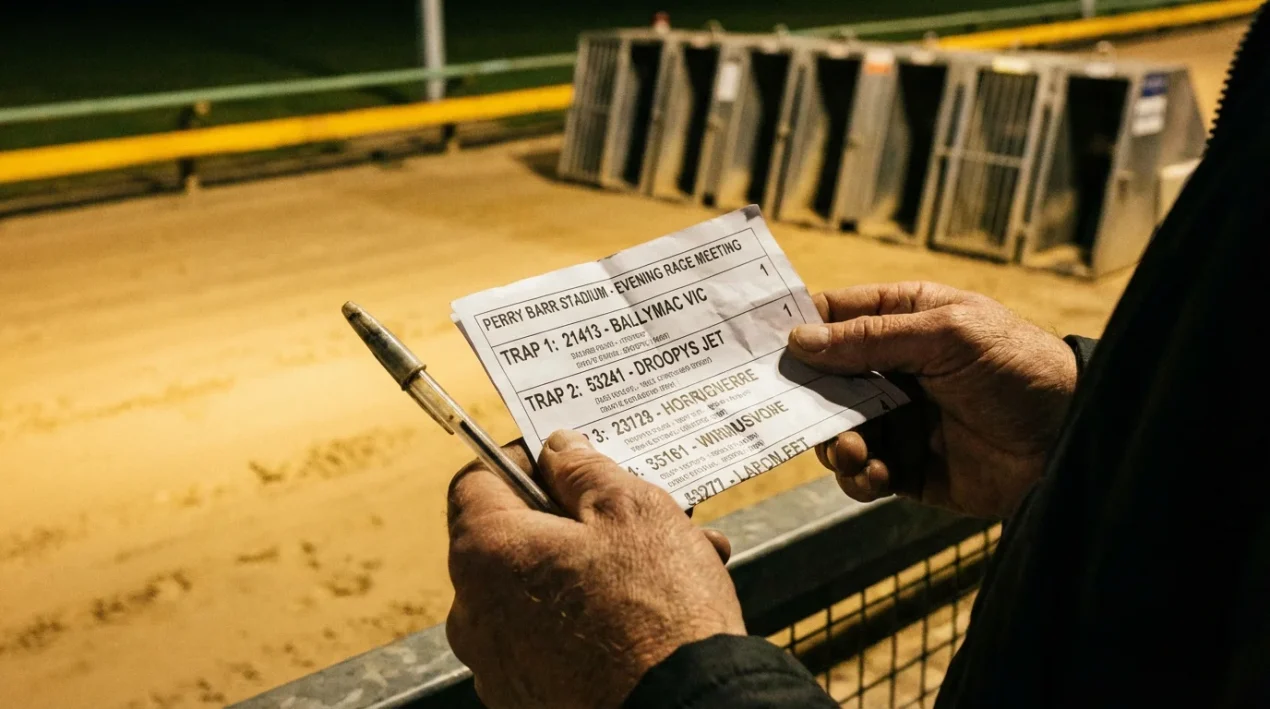
Contents
What Form Study Actually Means in Greyhound Racing
Greyhound form isn’t a record — it’s a compressed argument about what might happen next. That distinction matters more here than in any other betting sport. A horse can have twenty-five career runs spread across multiple courses, distances, and going descriptions. A greyhound racing at your local BAGS meeting might have raced twice in the last week, both times over the same 480 metres, from different traps, against different opposition. The form cycle is faster, tighter, and far more immediate. Get more form guides at greyhoundbettingstrat.
This compression creates a problem for punters who approach greyhound form the same way they approach horse racing. The methods don’t translate cleanly. Horse racing rewards deep historical analysis — sire lines, trainer patterns over seasons, course-and-distance records built over years. Greyhound racing rewards a different kind of attention: recent form, trap interactions, and understanding what a dog’s last three runs actually revealed about its current ability.
The home-track system amplifies this difference. Most greyhounds race predominantly at one stadium, running the same circuits week after week. That means the track knowledge embedded in their form is deeper than it first appears. A dog’s personal best time at Romford tells you almost nothing about how it would run at Monmore. Different circumferences, different bend tightness, different sand depths — the variables are too numerous for times to be directly comparable. What you’re really looking for is how that dog performs relative to its own standards, at its own track, in its current phase of fitness.
Then there’s the grading system, which shapes everything. UK greyhounds compete in graded races from A1 (highest) down to A11 at some tracks, plus open races that sit outside the grading ladder entirely. Dogs move up after winning, down after losing. This creates constant churn. A form figure of “1” from last week might mean nothing if the dog was racing two grades below its usual level. The number alone doesn’t tell the story. What matters is the grade the win came in, who the dog beat, and whether the performance suggests it can repeat at a higher level.
Understanding all this before you look at a racecard saves time and money. Greyhound form isn’t complicated, but it is specific. The numbers are dense, the codes need deciphering, and the skill lies not in collecting data but in filtering it. The pages that follow break down exactly what you’re looking at when you study greyhound form — and, more importantly, what you should be ignoring.
Decoding the Racecard: Every Symbol and What It Means
The racecard is the densest data sheet in racing — here’s how to read every line. Open any UK greyhound racecard and you’ll find six rows of compressed information, one for each trap. Each row contains roughly the same elements, though the presentation varies between platforms. What follows is a breakdown of what each data point means and how to use it.
The trap number and colour come first. Traps are numbered 1 to 6, with standardised jacket colours: red (1), blue (2), white (3), black (4), orange (5), and striped black-and-white (6). The colours exist so you can track the dogs around the circuit without squinting at tiny numbers. In sectional timing and race replays, you’ll reference dogs by trap colour more often than by name.
Next is the greyhound’s name and, usually, its breeding in brackets — sire first, then dam. Breeding matters less for short-term form analysis, but over time you’ll recognise bloodlines associated with early pace, stamina, or temperament. For now, treat it as background information rather than primary data.
Form figures follow the name. These are typically the last six race results, shown as finishing positions (1 through 6) and sometimes supplemented with letters. “1” means the dog won, “6” means it finished last. Some racecards show additional codes: “F” for fell, “D” for disqualified, “T” for a trial (non-competitive), and “M” for moved up due to a non-runner ahead. A blank or dash often indicates a race where the dog didn’t complete the course or the data isn’t available.
What form figures don’t show is where the race took place, what grade it was, or who the opposition were. A string of “1111” looks impressive until you realise the dog was dropping grades with each win. This is why raw form figures are a starting point, not a conclusion.
Best time and recent times appear next. The best time is usually the dog’s fastest recorded run at the track, though some cards show calculated times or adjusted figures. Recent times from the last two or three runs give you a sense of current form. Compare these to the best time and you’ll see whether the dog is running near its peak or well below it. Be cautious with times after track resurfacing or significant weather changes — they may not be directly comparable to historical figures.
Sectional times, where available, break the race into segments. A typical 480m race might show times at 90 metres (the first bend), 280 metres (the back straight), and 480 metres (the finish). Sectionals reveal pace profile: does the dog lead early and fade, or close from behind? This data is gold for race-reading, and we’ll return to it in detail shortly.
Trainer name and kennel are listed, sometimes with recent kennel form included. Some platforms show the trainer’s strike rate at the track or over recent weeks. When a trainer is running hot — consistently placing dogs in the first two — that’s worth noting, especially at smaller tracks where one kennel might dominate.
Weight is recorded, usually in kilograms to one decimal place. Greyhounds typically race between 26kg and 36kg, with most falling in the 28-33kg range. Weight alone doesn’t predict performance, but significant weight changes between runs can indicate fitness issues, season effects (for bitches), or recovery from injury. A dog dropping a kilo in a week without obvious cause is worth flagging.
Comments appear at the end of the line. These brief notes describe how the dog ran: “led from trap”, “checked second bend”, “finished well”. Comments are written by race observers and contain information you can’t extract from times alone. A comment like “badly hampered” next to a fifth-place finish tells you the form figure is misleading. Always read the comments. They’re the only narrative element on the racecard and often contain the clue that separates a value bet from a false favourite.
Sectional Times and What the Splits Reveal
Finishing times lie — sectionals tell the truth about where a dog gained or lost ground. A greyhound can post an impressive overall time while running a mechanically flawed race. It can record a poor time while demonstrating ability that the clock failed to capture. Sectional times let you disaggregate the performance and see what actually happened at each stage.
Most UK tracks now record sectionals at two or three points during a race. The standard format for a 480-metre race shows the time to the first bend (usually around 90 metres), the time to a mid-point (often 280 metres), and the total finishing time. From these three figures, you can calculate split times for each segment: the run to the bend, the back straight, and the closing section.
Early pace is the first thing sectionals expose. The run to the first bend tells you how quickly the dog broke from the traps and how much ground it covered before the field bunched. A dog consistently clocking fast first-bend times is an early pacer. This matters because early pacers often dictate races — they get to the rail first, avoid trouble, and force others to race wide. In a crowded field, early pace is worth more than raw ability.
But early pace isn’t everything. Some dogs break moderately, settle into stride, and produce their best work in the closing stages. Sectionals help you identify these closers. Compare the final segment time — the run from the last marker to the finish — across several races. If a dog consistently clocks the fastest closing split in its races, you’re looking at a genuine finisher. These dogs are often undervalued when drawn against early pacers, especially at longer distances where the pace tends to collapse.
Mid-race effort is harder to read but equally revealing. The back straight segment shows whether a dog maintained speed, accelerated, or began to tire. A dog that posts a quick first-bend time but slows notably on the back straight may be giving too much early. Conversely, a dog that settles behind the pace and then posts a quick back-straight split is positioning for a strong finish. These are the patterns that don’t show up in overall times.
One critical point: sectional times are not comparable across tracks. A 5.20 first-bend time at Romford means something different from a 5.20 at Sheffield. The distances to the first bend vary, the track surfaces vary, and the timing equipment varies. You can compare a dog’s sectionals against its own historical runs at the same track, and you can compare its sectionals against other dogs in the same race. Comparing across tracks is meaningless.
The same principle applies to run-to-time figures. Some platforms adjust finishing times to account for theoretical pace differences, creating a calculated run-to-time that supposedly represents “true” ability. These figures can be useful for rough comparisons, but they’re built on assumptions about pace that may not hold. A dog’s actual run, at its actual track, remains the most reliable data.
When studying sectionals, focus on patterns rather than single runs. A dog might post an unusually fast first-bend time because it got a flyer from the traps or because the field was slow to break. One reading proves nothing. But if the same dog consistently records first-bend times faster than its rivals, you’ve identified a genuine trait. That trait then becomes a betting angle: the dog should be backed when drawn favourably and opposed when drawn awkwardly.
Weather affects sectionals significantly. Wet tracks slow early pace more than they slow overall times, because the first bend is where dogs are accelerating hardest and lose the most traction. A dog known for fast breaks may struggle in the wet, while a steady early-pacer might gain relative advantage. Watch for dogs whose sectionals improve on rain-affected cards — they’re often overlooked by punters focused on historical best times.
The skill with sectionals is integration. No single split tells the full story. What matters is how the three segments combine, how they compare to the dog’s previous runs, and how they stack up against today’s opposition. Done well, sectional analysis gives you information the market often ignores — and information the market ignores is where profit lives.
Race Reading: What Form Figures Can’t Show You
A dog beaten five lengths might have been the best animal in the race — and the form figure won’t tell you that. This is where race-reading separates serious punters from racecard scanners. The form figure records a finishing position. It doesn’t record the trouble encountered on the way. It doesn’t show the bump at the first bend that cost three lengths, the wide run that added four, or the check in the back straight that killed momentum. All of that information exists, but you have to go looking for it.
Race replays are the primary tool. Most tracks now make replays available through RPGTV, Betfair, or track-specific platforms. Watching a replay once tells you what happened. Watching it three times tells you why. The first viewing is orientation — you track your dog, note where it finished, and form a general impression. The second viewing is analytical — you focus on the first bend, the second bend, and any interference. The third viewing is comparative — you watch the dogs around your subject and assess whether the interference was caused or suffered, avoidable or unlucky.
The first bend is where most races are decided. In a typical six-dog sprint, three or four dogs will reach the first bend within a length of each other. What happens next determines race shape. The inside dogs have the shortest path, but they’re vulnerable to pressure from outside. The outside dogs have clean running room, but they’re covering more ground. Crowding at the bend causes checks, bumps, and occasionally falls. A dog that consistently suffers first-bend trouble may be unlucky — or it may be slow to react and prone to getting caught in traffic. The replay tells you which.
Watch specifically for checked runners. A check is a significant loss of momentum, usually caused by another dog cutting across or slowing suddenly. On the racecard, this might appear in the comments as “checked first”, “badly hampered”, or “crowded”. But comments vary in quality. Some race observers are meticulous; others are cursory. The replay gives you objective evidence. A dog that lost four lengths to a check at the first bend and still finished within two lengths of the winner is a dog worth backing next time — probably at longer odds than it deserves.
Wide running is another pattern the replays expose. Some greyhounds naturally run wide around the bends. This isn’t necessarily a flaw; wide runners avoid traffic and can produce sustained closing runs. But wide running adds distance. A wide runner covering an extra six to eight metres over a 480-metre race is giving away significant ground. When you spot a dog that runs consistently wide, adjust your expectations accordingly. That dog needs to be faster than its rivals just to finish level, which means its raw form figures understate its ability.
Comments on the racecard sometimes contradict what the replay shows. A dog might be marked “led, headed final bend” when the replay shows it was clearly checked and lost momentum. These discrepancies matter. If you’re relying on racecard comments alone, you’re accepting someone else’s interpretation — and that interpretation isn’t always accurate. The replay is the primary source. The comment is a secondary summary.
The final consideration is finishing effort. Some dogs visibly empty in the closing stages; their stride shortens, their head comes up, and they coast to the line. Others dig in and close ground right to the wire. This finishing effort doesn’t always show in sectionals, especially if the dog was too far behind to matter by the final split. But it tells you something about character and fitness. A dog that always finishes with effort is a dog you can back with confidence when conditions align.
What Happens at the Bends Changes Everything
Bends are where greyhound races are won and lost — not the home straight. The geometry of a greyhound track creates natural chokepoints. The first bend is the most consequential because the field is at its most bunched and the dogs are at full acceleration. Any interference here compounds through the rest of the race. A dog that loses two lengths at the first bend rarely makes them back.
The second bend matters differently. By this point, the field has usually strung out. The leaders are clear, the backmarkers are struggling, and the mid-pack runners are deciding whether to commit. Dogs that swing wide at the second bend often do so because they’re trying to find racing room. This costs ground but avoids interference. Dogs that tuck inside may save ground but risk being boxed in behind slowing runners. The choice — wide and clear or tight and risky — is part of each dog’s character.
Track shape affects bend importance. Tighter circuits punish wide runners more severely; the ground loss is proportionally greater. Longer circuits are more forgiving because the straights give dogs time to recover lost momentum. When studying a track you’re unfamiliar with, watch several replays specifically for bend action. You’ll quickly see which bends cause the most trouble and which dogs struggle most with the geometry.
Crowding patterns recur. If a dog has been checked at the first bend in three consecutive runs, that’s not bad luck — it’s a dog that breaks slowly or runs into traffic habitually. These dogs are hard to back confidently because the same problem will likely repeat. Conversely, a dog that consistently reaches the first bend clear, even from awkward traps, is showing a repeatable skill. That skill translates directly into betting value.
Spotting Patterns: Improving Dogs, Declining Dogs, and Fakes
Improvement is only real if you can explain it with more than just the result. Greyhound form is full of false signals — dogs whose recent wins look impressive but don’t predict future success. The skill is distinguishing genuine improvement from flattering circumstances.
Genuine improvement typically has a cause. Young dogs develop physically and learn to race; their muscles strengthen, their break technique sharpens, and their confidence builds. This is real improvement, and it tends to be progressive. A puppy showing marginal gains over successive runs is following a natural development curve. Back it before the market catches up. Grade drops also produce genuine improvement — or rather, they reveal existing ability that was hidden by overclassification. A dog that struggled in A2 but dominates in A4 isn’t improving; it’s competing at its correct level. Both scenarios offer value, but they require different handling. The developing puppy may continue improving; the grade-dropper has probably reached its ceiling.
Kennel changes sometimes trigger improvement. A new trainer might use different training methods, better nutrition, or simply provide a fresher environment. When a dog switches kennels and immediately improves, watch carefully. If the improvement holds over three or four runs, it’s likely genuine. If it fades quickly, the change was temporary stimulation rather than real development.
Declining dogs are easier to spot but harder to act on. A greyhound in decline shows progressive slowing: times drift, positions worsen, and comments start mentioning fading or tiring. The decline might be age-related (most greyhounds peak between two and four years), injury recovery, or loss of interest. Whatever the cause, declining dogs should be opposed. The market often underestimates decline because recent form figures still include older, better performances. If a dog’s last three runs are worse than its previous three, and the trend shows no sign of reversal, the odds probably don’t reflect its actual current ability.
Fakes are the trickiest category. These are dogs whose form figures look good but whose performances were flattered by circumstances. The classic fake is a dog that won because the race collapsed around it — the favourite fell, two fancied runners checked each other, and the fake inherited a win it didn’t earn. The form figure shows “1”, but the replay shows a dog that was going nowhere until luck intervened. Backing this dog next time, at short odds based on the win, is a losing proposition.
Similarly, dogs can post fast times in slowly run races when they’ve inherited an easy lead and maintained it without pressure. These times look impressive but don’t indicate ability to handle genuine competition. Watch the replays. Did the dog beat good opposition in a properly run race, or did it benefit from a tactical vacuum? The answer changes everything about how you rate the form.
The concept of the “ungenuine” greyhound covers another category of fake. Some dogs try hard when fresh but give up under pressure. They lead early, get challenged, and stop trying. Their form shows flashes of ability interspersed with disappointing runs. These dogs are hard to back because you never know which version will show up. They’re best avoided unless the race conditions — weak opposition, a clear run from a good trap — strongly favour them showing their better side.
Tools and Resources for Form Study
You don’t need expensive software — but you do need a system. Greyhound form study relies on a few core resources, most of which are free or included with a betting account. The difference between punters who use these tools effectively and those who don’t lies not in access but in method.
The Racing Post greyhound section remains the standard reference. Racecards for all UK meetings are available with full form figures, sectional times, trainer information, and race comments. The interface is functional rather than elegant, but the data is comprehensive. For each dog, you can access career statistics, track form, and recent performances. The Racing Post also publishes ratings and tips, though these should be treated as one opinion among many rather than gospel.
Timeform offers a more analytical approach. Their greyhound ratings attempt to quantify ability on a single scale, adjusting for race grade and conditions. The ratings are useful for comparing dogs across different tracks, something raw form makes difficult. Timeform’s commentary tends toward the analytical, highlighting specific angles like trap bias or pace scenarios. Access requires a subscription, but serious punters often find it pays for itself through sharper selections.
RPGTV provides race replays for most UK meetings. The replays are the irreplaceable resource for race-reading — you simply cannot assess trouble in running, closing effort, or running style without watching the races. RPGTV is available through Sky and online platforms. Many bookmakers also offer embedded replays on their sites. Whichever access route you use, build replay watching into your routine. Every dog you consider backing should be watched, not just studied on paper.
Betfair’s form section offers an alternative interface with integrated market data. The advantage here is seeing how the market has moved alongside the form — if a dog’s price shortened dramatically after its last run, that tells you something about how professionals rated the performance. Betfair also shows exchange liquidity, which indicates how much smart money is flowing into each selection.
Beyond these public resources, many successful punters build personal databases. This can be as simple as a spreadsheet tracking your bets, observations, and results. Over time, the spreadsheet becomes a record of what works and what doesn’t at your chosen track. You’ll notice patterns: certain trainers perform better on specific race nights, certain trap draws produce disproportionate results, certain types of dogs consistently outperform their odds. These patterns aren’t secret — they’re sitting in your own data, waiting to be extracted.
A basic form database might track: dog name, date, track, distance, trap, finishing position, winning time, your pre-race notes, and post-race observations. After fifty races, you’ll have enough data to spot trends. After two hundred, you’ll know the track better than most casual punters. The investment is time rather than money, and the return compounds over months.
Automated systems and APIs exist for those with programming skills. Greyhound Data and similar services offer bulk data downloads that can be imported into custom analysis tools. This is overkill for most punters, but if you’re inclined toward systematic approaches, the data infrastructure exists. The caution here is that more data doesn’t necessarily mean better decisions. A punter with excellent race-reading skills and a simple notebook will often outperform a data scientist who never watches replays.
The Dog You Don’t Bet On Matters More
Profitable punters don’t find winners — they eliminate losers until one is left. This reframing changes how you approach form study. The instinct for most people is to look at a six-dog race and ask “which one will win?” The professional question is different: “which four or five can I confidently rule out?”
The distinction matters because the betting market is built on error aggregation. When the public backs a dog, they’re often backing it for the wrong reasons: it won last time, it has a low trap number, its name sounds fast. These lazy reasons create price distortions. The dog gets backed shorter than its true probability deserves. Your job, as a form student, is to identify which dogs are absorbing this poorly reasoned money — and to avoid them.
Elimination is faster and more reliable than selection. You can usually scratch two or three dogs from a race within thirty seconds: the one dropping from a grade it couldn’t handle, the one with three consecutive poor runs, the one drawn impossibly against its running style. These eliminations don’t require deep analysis. They’re obvious once you know what to look for.
What remains after elimination is your shortlist. Maybe it’s two dogs, maybe three. Now the harder work begins — comparing their relative merits, assessing their likely race positions, and deciding whether the odds offered represent value. But you’re no longer trying to pick a winner from six unknowns. You’re comparing a small number of genuine contenders. The problem has shrunk.
This elimination-first approach also protects against the most common form-reading error: falling in love with a dog. When you’re searching for a winner, you’ll inevitably find reasons to like the dog you want to like. Confirmation bias kicks in. You notice the positives and downplay the negatives. But when you’re eliminating, you’re looking for disqualifying flaws. You’re asking “what’s wrong with this dog?” rather than “what’s right with it?” This mindset catches problems that the selection mindset misses. Also read our how to read a greyhound racecard.
The practical habit is simple: for every race, write down your eliminations before you consider your selection. Note the reason for each scratch. After a month, review your eliminations. How many of those dogs actually won? If the answer is “very few”, your elimination process is sound. If eliminated dogs are winning regularly, something in your filtering is broken. Adjust and continue.
Greyhound form study isn’t about finding the winner. It’s about building a framework that reliably removes the losers. The winner emerges from the process, almost as a by-product. When you’ve eliminated everyone who shouldn’t win, whoever remains — however improbable they first seemed — becomes your bet.
