Greyhound Race Grades Explained: A1 to A11 in the UK
 Available in US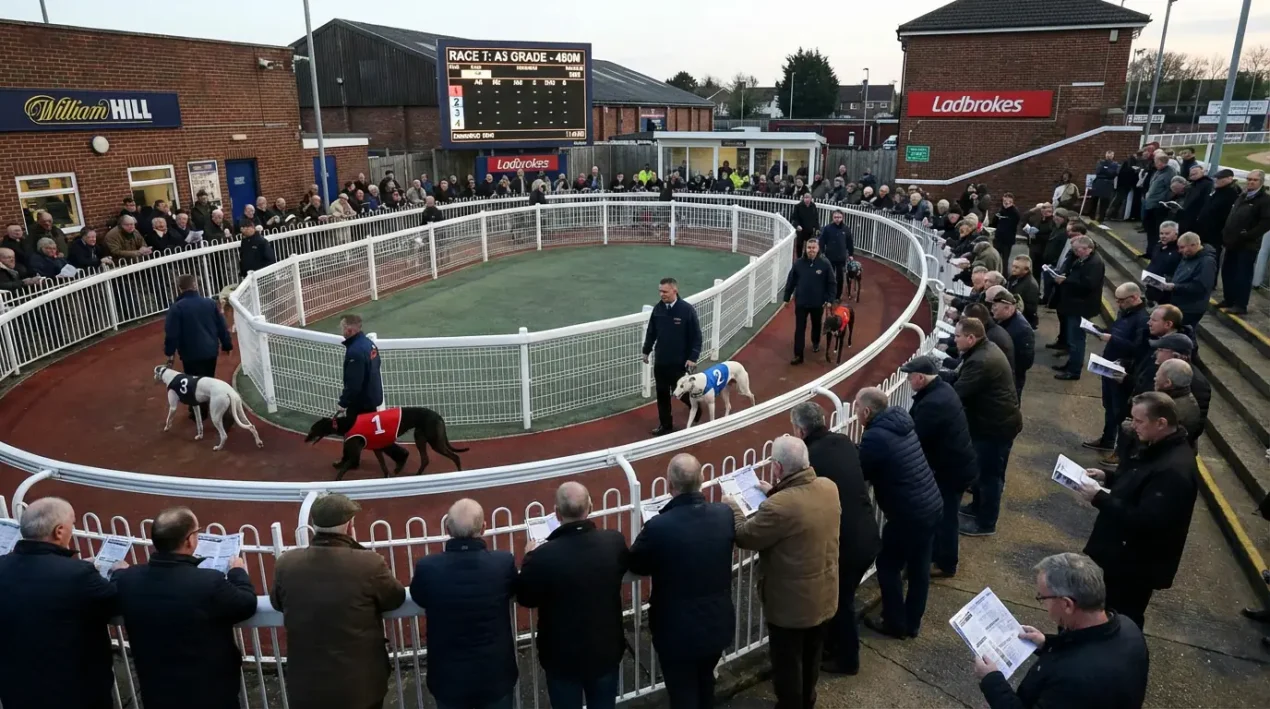
Contents
The Grading System Is the Spine of UK Greyhound Racing
Every greyhound registered with the Greyhound Board of Great Britain is assigned a home track and slotted into a grading system that determines the quality of competition it faces. This isn’t a rankings table that resets each season. It’s a live classification framework where dogs move up or down based on results, and understanding how it works is essential for any punter who wants to make sense of greyhound form. Find more race guides at greyhoundbettingstrat.
UK graded races run from A1 at the top to A11 at the bottom. A1 races feature the fastest and most consistent dogs at a stadium. A11 races are populated by young dogs learning the trade, older dogs winding down, or animals that have been reassigned after a series of poor results. Between those extremes, each grade represents a band of ability, and the movement between grades — up after strong performances, down after weak ones — creates constant flux in the quality of competition a dog faces from week to week.
For bettors, the grading system is the single most important context for interpreting form. A dog that won its last race in A6 is a different proposition depending on whether it’s now running in A5 (stepped up after a win, facing tougher opposition) or A7 (dropped down, likely to find things easier). Without knowing the grade of the previous race and the grade of the current one, form figures are missing their most critical dimension.
How the Grading System Works
Greyhound grades are set by the racing office at each track based on recent race times and results. The precise criteria vary slightly between stadiums, but the general principle is consistent: faster dogs race in higher grades against other fast dogs, and slower dogs compete in lower grades against dogs of similar ability. The system is designed to produce competitive races where the six runners are as evenly matched as possible.
Each grade corresponds roughly to a band of race times over a standard distance. At a track where the 480-metre standard race time ranges from 29.00 for A1 to 31.50 for A11, the time bands are approximately 0.20 to 0.25 seconds per grade. That might sound trivial, but in greyhound racing a quarter of a second is roughly two lengths — more than enough to separate a comfortable winner from a mid-pack finisher.
Dogs typically move up one grade after winning a race or posting a time significantly faster than their current grade’s standard. They move down after finishing outside the places in consecutive races, or when their recent times suggest they’re no longer competitive at their current level. The racing office has discretion in how aggressively it promotes or demotes dogs, which is why the same grade at two different tracks doesn’t always represent exactly the same standard of competition.
In addition to the standard A-grade structure, tracks also stage open races — higher-quality events that sit outside the grading system and attract dogs from multiple tracks. Open races are classified by their prize money: OR (open race), OR1, OR2, and so on, with prize categories ranging from minor events to the sport’s flagship competitions like the English Greyhound Derby and the Greyhound St Leger. Open-race form is generally the most reliable in greyhound racing because the fields are assembled from the strongest available dogs, producing more predictable race outcomes than the random fluctuations of graded racing.
There are also specialty categories: puppy races (for dogs under 24 months), sprint races, stayers events, hurdles, and handicaps where dogs of different grades race from staggered starting positions. Each category has its own form dynamics, but the A-grade system remains the foundation that everything else is measured against.
How Dogs Move Between Grades
Grade movement is where most of the actionable betting intelligence in the system lives. A dog’s current grade is a snapshot, not a permanent classification. Dogs move through grades constantly, and the direction and pace of that movement tells you a great deal about their current form trajectory.
Upward movement — promotion from, say, A5 to A4 — typically follows one or more wins. The dog has proven it’s too good for its current level and is moved up to face stiffer competition. The critical question for bettors is whether the dog’s ability genuinely warrants the step up, or whether a single good performance in a weak race triggered an undeserved promotion. A dog that won an A5 race by six lengths in a fast time is probably ready for A4. A dog that scraped home by a nose in a slowly run A5 might struggle immediately in the higher grade.
Downward movement — demotion from A4 to A5, for example — is the more profitable situation for punters. Dogs drop grades for several reasons: a run of poor results, returning from injury or layoff, or coming back after a bitch’s season. In each case, the dog is now facing weaker opposition than it was before. If the reason for the drop is temporary (the bitch returning to fitness, a dog recovering from a minor setback), the demotion creates an opportunity. The dog has the ability for a higher grade but is racing in a lower one, and until it wins and gets promoted again, it may represent genuine value.
Grade drops following a kennel transfer are particularly interesting. When a dog moves to a new trainer and switches home tracks, it often drops a grade or two while it acclimatises to new surroundings. The ability hasn’t changed — only the environment has. These dogs frequently outperform their new grading once they’ve settled, making the first few runs at the new track a potentially productive betting window.
What Grade Changes Mean for Your Bets
The practical application of grading knowledge comes down to three principles that apply to virtually every graded race you’ll analyse.
First, respect the step-up. A dog promoted from A6 to A5 is facing competition that’s roughly two lengths faster per race on average. That’s a substantial jump, and many dogs that looked dominant in the lower grade will be exposed in the higher one. Unless the dog won its previous race with a time that would be competitive in the new grade, treat the first run after promotion with caution. The market often overvalues recent winners without adjusting for the increased difficulty.
Second, exploit the drop. Dogs moving down in grade are the bread and butter of value betting in greyhound racing. Look for dogs that have dropped one or two grades after a spell of poor form and ask whether the poor form was caused by factors that have now resolved — a bad draw, interference in running, post-season recovery for bitches, or simply a run of races where the competition was unusually strong for the grade. If you can identify a legitimate reason for the decline, and that reason no longer applies, the grade drop is a gift.
Third, track the time standards for each grade at your chosen tracks. This is essential context. Knowing that A4 at Hove typically requires a 29.60 to win, while A4 at Monmore requires a 29.80, prevents you from overrating form that was achieved at a slower track. Time-grade benchmarks are the closest thing greyhound racing has to a universal rating system, and building familiarity with the standards at your specialised track is fundamental to accurate form assessment.
Graded racing accounts for the vast majority of meetings at UK stadiums. The dogs you’ll encounter most frequently are moving through this system, being promoted and demoted week by week. The punter who understands the grading structure — and, more importantly, who understands what grade movement reveals about a dog’s current ability relative to its current competition — has a permanent informational edge over the punter who simply backs the form pick without considering the grade context.
Grades Are a Compass, Not a Map
The grading system provides the essential framework for understanding greyhound competition, but it doesn’t capture everything. A dog’s grade tells you where the racing office thinks it belongs based on recent evidence. It doesn’t tell you whether the dog is improving, declining, returning from a setback, or about to peak. Those assessments require form reading, race replays, and trainer pattern analysis — the qualitative work that sits on top of the quantitative grading structure. Also read our open vs graded races.
Think of grades as the starting point for every assessment. They tell you the approximate level of competition and the rough speed required to be competitive. From there, the real work begins: comparing the dog’s actual recent performances against that benchmark, accounting for trap draws and running styles, and deciding whether the current odds reflect a fair assessment of its chance. The grade is the compass heading. Your analysis is the route.
