Betfair Greyhound Trading: In-Play Strategy Guide
 Available in US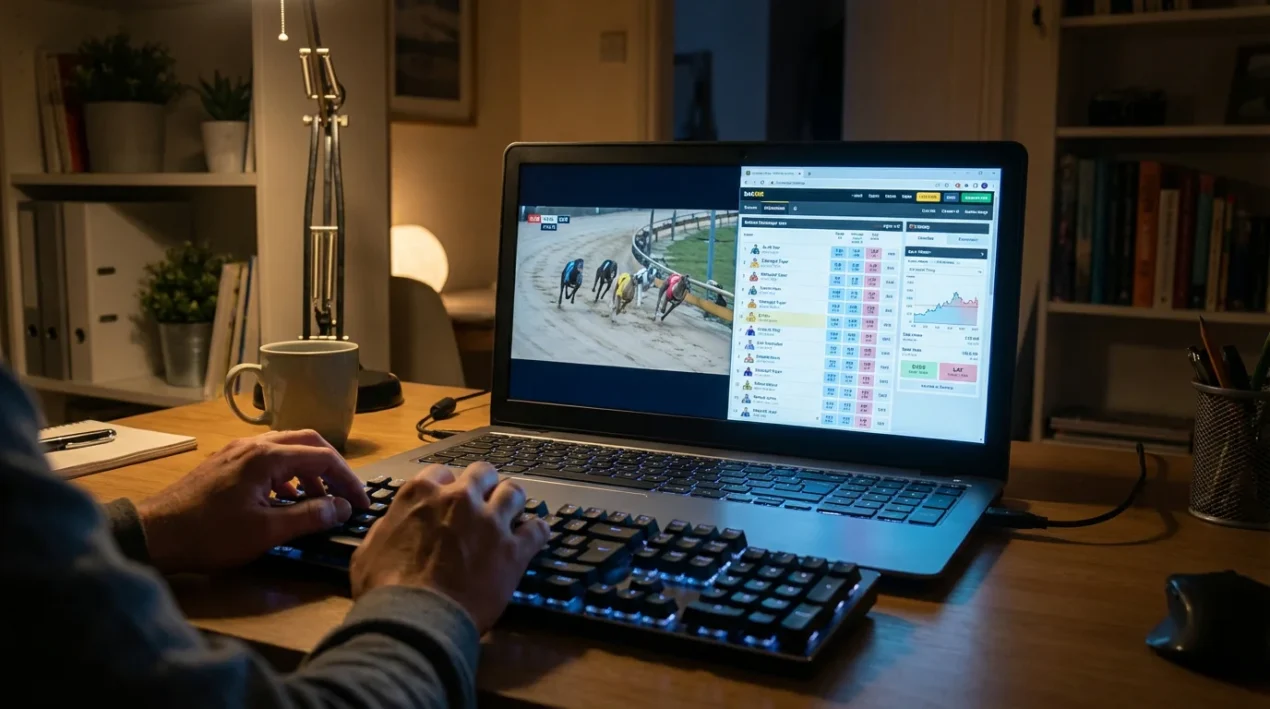
Contents
Trading the Market, Not the Race
Greyhound trading on Betfair operates on a different logic than conventional betting. The trader does not need to predict the winner. Instead, the trader identifies price movements and profits from the difference between backing and laying at different prices. The race result becomes secondary to the market movement. Find more exchange guides at greyhoundbettingstrat.
This approach suits greyhound racing for specific reasons. Races are short — thirty seconds of running — which compresses in-play trading opportunities into tight windows. Pre-race markets, however, provide substantial time for price discovery, with odds fluctuating as information enters the market. The combination creates two distinct trading environments within the same event.
Liquidity is the fundamental constraint. Betfair greyhound markets attract less money than horse racing or football. Major evening cards have reasonable depth; afternoon BAGS meetings are thinner. Traders must accept that large positions may not get matched at desired prices, and that moving in or out of positions may require accepting worse odds than intended.
The mechanics are straightforward in principle: back at a higher price, lay at a lower price, or vice versa. If you back a dog at 4.0 and lay it at 3.5 before the race, you lock in a profit regardless of the result. If the price moves against you — backing at 4.0 and watching it drift to 5.0 — you face a choice between accepting a loss or holding through the race. Trading discipline means executing the plan regardless of which way that choice falls.
Pre-Race Market Movements
Greyhound markets open hours before the race but remain largely static until the final minutes. Genuine price discovery happens close to the off, when serious money enters and shifts the market to its final shape. The trader who understands this timing can position themselves to capture value as prices adjust.
Steamers are dogs whose price shortens significantly in the run-up to the race. A dog that opens at 5.0 and trades at 3.5 by post time has been steamed. This movement indicates market confidence — informed money backing the dog — and often continues until the final seconds. Traders who back early and lay as the price contracts capture the movement without needing the dog to win.
Drifters move in the opposite direction. A dog opening at 3.0 that drifts to 4.5 is being opposed by the market, either through direct laying or through money supporting other runners. Laying drifters early and backing them later as the drift stabilises can produce trading profit. The challenge is judging when the drift has finished — mistiming the close leaves you exposed to further price extension or a reversal.
Market support often follows patterns. Kennel connections, tipsters, and professional punters tend to back dogs in the final five to ten minutes. Monitoring where the volume concentrates — which dogs are attracting matched money — provides clues about likely price direction. Software tools display this flow in real time, but even manual observation of the Betfair ladder reveals where the action is concentrated.
False moves complicate the picture. A dog might shorten briefly on a single large bet, only to drift back when no follow-up money appears. Trading on the initial move without waiting for confirmation can trap you in a position that reverses. Patience — letting the price prove its direction before acting — protects against this whipsaw effect.
The Green-Up and Hedge Mechanic
Green-up refers to closing a trade to guarantee a profit regardless of the race outcome. If you back a dog at 4.0 for ten pounds and the price shortens to 3.0, you can lay it at 3.0 for ten pounds to lock in profit. Your back bet wins ten times three equals thirty pounds minus your ten-pound stake, giving twenty profit if the dog wins. Your lay bet loses ten times two equals twenty if it wins. Net position: zero on a win, but if it loses, you win ten on the lay and lose ten on the back — also zero. Somewhere in between, you can lay a larger amount to create a guaranteed profit split across all outcomes.
The green-up calculation distributes profit evenly. Using a trading calculator or exchange software, you determine the lay stake that produces equal profit regardless of whether the dog wins or loses. The exact stake depends on the back price, the lay price, and the original back stake. Most trading software handles this automatically, displaying the potential green-up amount as the price moves.
Hedging works similarly but may not aim for equal distribution. A punter who backed at 4.0 and now wants to reduce exposure can lay some amount at the current price, accepting different profit levels depending on the outcome. Full green-up equalises returns; partial hedges tilt the balance toward one result while reducing overall risk.
The temptation is to let winning positions run rather than green up. A dog that has steamed from 4.0 to 3.0 might continue to 2.5. Closing too early leaves money on the table. But greyhound markets can reverse abruptly — one negative piece of information, one late withdrawal, one wave of opposing money — and the position that looked profitable becomes a liability. Discipline means defining your exit criteria before the trade begins and honouring them when reached.
Timing the Greyhound Market
Greyhound market timing differs from other sports due to race frequency and market maturity patterns. With races running every fifteen minutes at busy meetings, the window for trading each race is compressed. You cannot spend thirty minutes analysing a market that closes in twenty.
Most useful price movements occur in the final ten minutes before post time. Earlier prices are indicative at best, often set by market makers and arbitrage bots rather than genuine backing or laying activity. Traders focusing on pre-race movement should concentrate their attention on this late period, when real money commits and prices move toward their true levels.
The final sixty seconds are the most volatile. Large orders that accumulated in the queue execute, and last-minute information drives rapid adjustments. Trading in this window requires fast execution and clear decision rules. Hesitation means missing the price; indecision means holding an unintended position into the race.
In-play trading on greyhounds is extremely limited. The race lasts under thirty seconds; by the time you assess the early running, the race is nearly over. Some traders use software to lay the field in-play automatically, hoping to lay the leader before it wins, but latency and market depth make this unreliable. For most punters, greyhound trading is a pre-race activity exclusively.
Session structure matters for profitability. Attempting to trade every race leads to forced positions and diminished edge. Selective trading — waiting for clear setups where price movement is likely — produces better returns than constant engagement. Quality of trades outweighs quantity.
Trading Rewards Process Over Prediction
Successful greyhound trading depends less on picking winners than on reading markets and executing precisely. A trader can profit consistently without ever predicting which dog crosses the line first, provided they understand price dynamics and respect their trading rules.
This approach suits punters who prefer process to outcome variance. Backing requires accepting that you will lose more individual bets than you win, relying on the margin of your wins to cover the losses. Trading, by contrast, aims to lock in many small guaranteed profits through controlled entries and exits. The psychological experience differs: fewer highs and lows, more consistent grinding.
The skills are also different. Trading requires rapid decision-making under time pressure, comfort with exchange mechanics, and the discipline to close positions even when you believe the dog will win. Betting requires form analysis, value assessment, and the patience to wait for selections. Some punters combine both; others specialise in one approach.
Commission erodes trading profits more aggressively than betting returns because traders pay commission on both the back and lay side of a completed trade. Tight margins mean commission can consume a significant portion of each trade’s profit. Factor this into your edge calculations: a strategy that looks profitable before commission may become marginal or negative afterward. Also explore our exchange betting guide.
Trading is not a shortcut. It substitutes one set of challenges for another. What it offers is flexibility — another way to extract value from greyhound markets without requiring the uncertainty of race outcomes. For punters who understand markets better than form, trading may prove more natural and more profitable.
