
Greyhound Sectional Times: What the Splits Really Tell You
 Available in US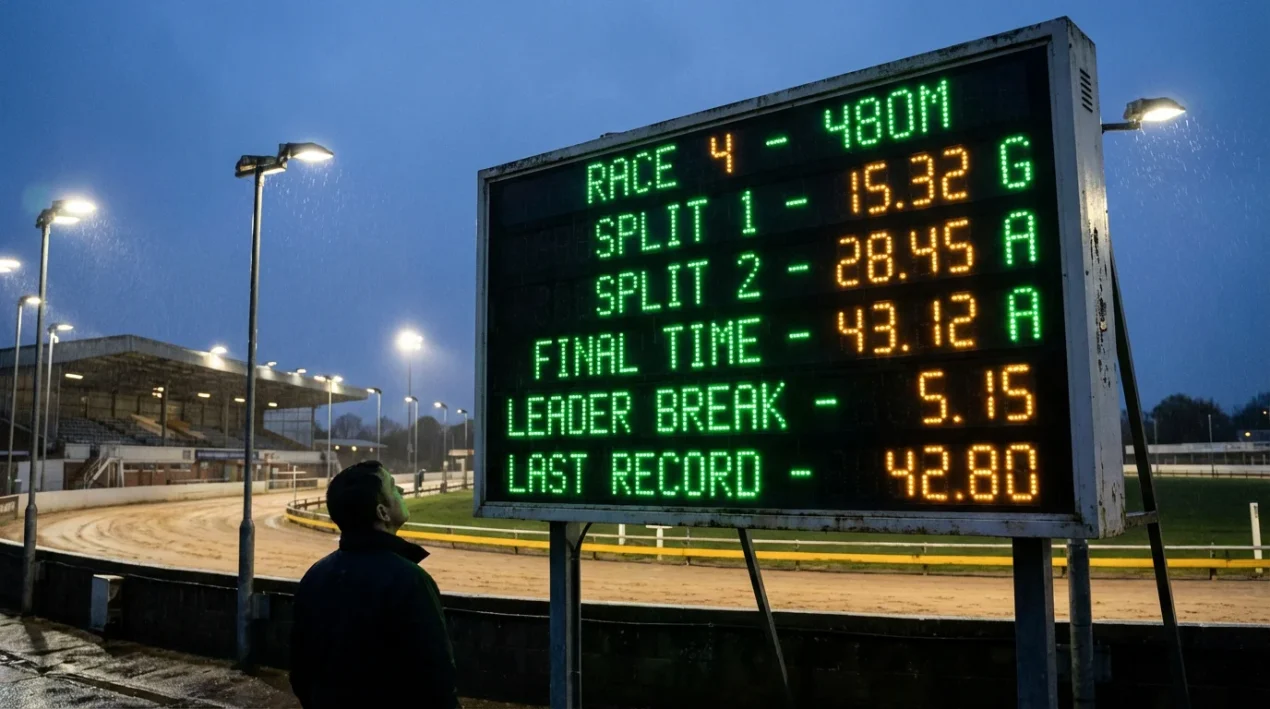
Contents
Finishing Times Lie — Sectionals Tell the Truth
A greyhound’s overall race time is the most visible number on the racecard and the most misleading. Two dogs might both clock 29.50 seconds over 480 metres, but their races could be entirely different. One broke fast, led by three lengths at the second bend, and eased down through the closing stages. The other missed the break, got checked at the first turn, made up ground on the outside through the back straight, and flew home to dead-heat on the line. The time is identical. The performance isn’t even close. Get more race analysis at greyhoundbettingstrat.
Sectional times — the splits recorded at intermediate timing points around the track — expose what the overall time conceals. They tell you where a dog gained or lost ground, how quickly it broke from the traps, whether it sustained its speed through the bends, and how much it had left in the final run-in. For any punter serious about form analysis beyond surface-level statistics, sectional data is where the real insights live.
UK tracks typically record a run-to-the-line sectional (the first split, covering the run from traps to the first timing beam, usually near the first or second bend) and the overall time. Some tracks and data providers offer more granular splits. The difference between a dog that posts a first-split of 3.85 seconds and one that posts 4.10 seconds is roughly two lengths at the first bend — and that gap shapes everything that follows in the race.
How to Read Sectional Splits
The first sectional — often referred to as the run-up time or early-pace figure — is the most important number for race-shape analysis. It tells you how quickly the dog got out of the traps and into racing position. A fast first split means the dog was near the front at the first timing point, which in turn means it had a cleaner run through the bends and faced less interference. A slow first split usually indicates trouble at the break: slow out of the box, checked by another runner, or simply not sharp enough early on.
Context is critical when reading these figures. A first split of 3.90 at Nottingham and 3.90 at Romford are not equivalent performances. Track circumference, distance from traps to the first timing beam, and the placement of the timing equipment all differ between venues. Sectional times are only comparable within the same track, over the same distance, and ideally within the same meeting or at least a similar time period. Comparing raw sectionals across different stadiums is meaningless — the infrastructure simply isn’t standardised.
The calculated sectional — the difference between the first-split time and the overall time — gives you the dog’s finishing speed. A dog with a relatively slow early pace but a fast calculated sectional is a closer: it comes from behind and finishes strongly. A dog with a blistering first split but a slower calculated sectional is a front runner that may tire if it faces sustained pressure. Both profiles can win races, but they do so under different conditions, and the sectional data tells you which profile applies to each dog in the field.
When you see a dog whose calculated sectional is significantly faster than its rivals in recent runs, pay attention. That finishing speed — especially if it was achieved while the dog was running wide or encountering traffic — suggests the dog has more ability than its recent finishing positions indicate. These are the race-reading moments where sectional data converts directly into betting value.
Why You Can’t Compare Sectionals Across Tracks
This point deserves its own emphasis because it’s the most common error punters make with sectional data. A dog that transfers from Sheffield to Monmore for an open race brings its Sheffield form figures with it. But Sheffield’s timing points, track configuration, and surface characteristics are different from Monmore’s. The sectionals recorded at Sheffield tell you about that dog’s performance relative to other Sheffield runners. They tell you almost nothing about how it will perform at Monmore.
The same applies to grade comparisons. A dog posting a 29.30 overall time in A3 graded company at one track might be outclassed in A3 company at another track where the standard times are faster. Without adjusting for track-specific baselines, you’re comparing apples to engine blocks. Some data services provide adjusted or standardised time ratings that attempt to account for these differences, and those are worth exploring if you’re analysing dogs that race at multiple venues.
Within a single track, though, sectional comparisons are highly productive. If six dogs in tonight’s A4 race at Hove have all raced at Hove over 480 metres in the past month, their sectionals are directly comparable. You can see who breaks fastest, who finishes strongest, and who is consistently losing ground through the bends. That’s a competitive map of the race before a single dog leaves the trap.
Track records and standard times for each grade provide a useful benchmark. If the A5 standard at your chosen track is 29.80 over 480 metres, and a dog dropping from A4 has been running 29.65 in its recent outings, you’re looking at a dog that should have a clear speed advantage in the lower grade. The sectionals add texture to this picture: if the 29.65 was achieved with slow early pace and a flying finish, the dog might be even better with an uncontested lead in a weaker race.
For dogs transferring between tracks — a common occurrence in open racing and major competitions — the most honest approach is to discard the sectional data from the previous track entirely and look at overall form indicators: class, consistency, and the quality of dogs it has beaten or been beaten by. Once it’s run once or twice at the new venue, you’ll have local sectionals to work with.
Using Sectional Data in Your Selections
Sectionals are most useful as a filter, not a formula. They help you identify dogs whose raw finishing positions don’t reflect their true ability — and they help you spot dogs whose results are flattered by circumstances that won’t repeat.
A dog that finished fifth but posted the fastest calculated sectional in the field probably encountered significant trouble in running. Check the race replay to confirm, but if the sectional data and the visual evidence align, you’ve found a dog whose next run is likely to produce a much better result, assuming it gets a cleaner passage. The market often prices these dogs on their last finishing position rather than their last performance, creating a window of value.
Conversely, a dog that won its last race but posted average sectionals might have benefited from a perfect trap draw, a pace collapse among the other runners, or interference that took out its main rival. Winning while recording unimpressive splits is a warning sign. The result looks good; the performance was ordinary. Backing that dog at short odds next time out is a trap that sectional analysis helps you avoid.
The most disciplined approach is to build a simple personal database — even a spreadsheet works — that records the first split, calculated sectional, and overall time for every dog at the track you specialise in. Over a few weeks of meetings, patterns emerge that no racecard summary can capture. You’ll see which dogs consistently post fast early splits regardless of their draw, which ones always finish strongly, and which ones produce flashy-looking times that owe more to favourable circumstances than genuine ability.
The Split That Doesn’t Appear on the Racecard
The most important sectional in greyhound racing isn’t recorded by any timing beam. It’s the split between the traps opening and the dog’s first stride — the reaction time. Some dogs are bolt-fast from the boxes. Others take half a second longer to fire, which at these speeds translates to two or three lengths before the race has truly begun. You can’t find this number in any published dataset. You can only see it by watching race replays and paying close attention to the moment the lids rise. Also read our greyhound early speed guide.
This unrecorded split is one reason why experienced race-readers — punters who watch replays carefully and take notes — consistently outperform those who rely purely on published data. The numbers on the racecard capture the middle and end of the race. The replay captures the start, and the start in greyhound racing often determines everything that follows. Sectional times give you the framework. Your own eyes fill in the rest.
