
Greyhound Tote and Pool Betting Explained
 Available in US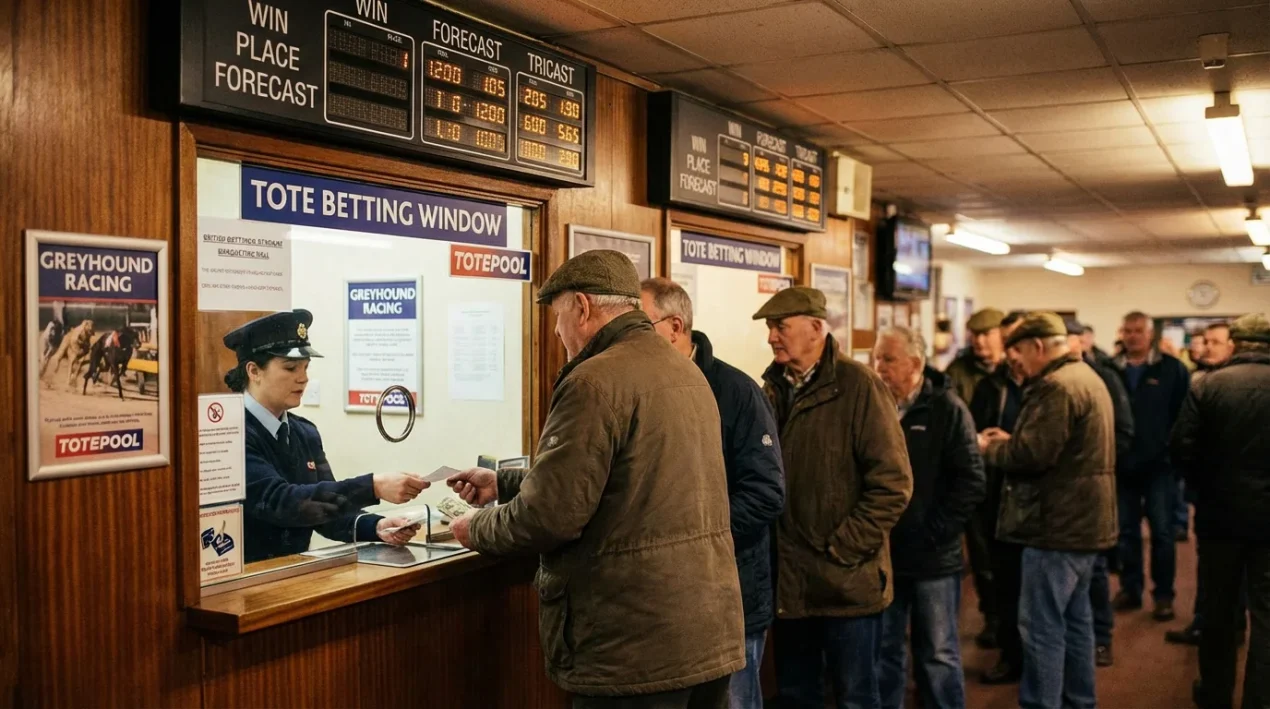
Contents
A Different Way to Bet
Most greyhound betting happens at fixed odds. You see a price, you take it, and that price determines your payout. Tote betting operates differently. Your bet enters a pool along with everyone else’s, the pool is divided among winners after the operator takes a cut, and your return depends on how much was bet on the winning outcome relative to the total pool. Find more bet type guides at greyhoundbettingstrat.
This pari-mutuel system has operated alongside fixed-odds betting for decades. At UK greyhound tracks, Tote windows offer win pools, forecast pools, and various exotic bets that function entirely on pool principles. Online, Tote betting is available through the Tote’s own platform and through some bookmakers that feed into pooled markets.
For most punters, fixed odds remain the default. But pool betting offers advantages in specific situations — particularly for exotic bets and unusual results — that reward understanding the system and knowing when to use it.
How Tote Betting Works
In pool betting, all stakes on a particular bet type go into a shared pool. After the race, the operator deducts a percentage — the takeout — and distributes the remainder among winning bets. Your share of the winnings depends on what proportion of the winning bets your stake represented.
The takeout varies by pool type and operator. For greyhound racing, the standard deduction is typically around 25-34% depending on the track (for example, 34% at most tracks but 25% at Dunstall Park). This is higher than the typical bookmaker margin on fixed-odds bets, meaning pool betting carries a structural disadvantage for most standard wagers. The maths favours fixed odds for simple win bets in most circumstances.
Returns are not known until after the race. Unlike fixed odds, where you lock in a price at the time of betting, pool returns depend on total betting activity. Heavy money on your selection reduces your share of the pool; light money on your selection increases it. This creates situations where pool returns exceed or fall short of equivalent fixed-odds prices.
Pool betting happens in real time at the track. Screens display current pool totals and approximate returns, updating as money flows in. Online Tote betting also shows indicative dividends, though these can shift significantly in the final minutes before a race. The uncertainty can work for or against you depending on late betting patterns.
Minimum bets for pool wagers are typically low — often one pound or less — making them accessible to casual bettors. This low barrier encourages recreational participation that can inflate pools on favourites while leaving outsider dividends underbet. The profile of pool bettors tends toward casual punters, which affects dividend distribution.
Unlike fixed-odds betting, pool returns include your stake in the returned amount. A dividend of three pounds means you receive three pounds total, including your original one-pound stake — a net profit of two pounds. This presentation differs from fixed-odds returns and can cause confusion for those unfamiliar with pool betting formats.
Pool Bet Types for Greyhounds
The win pool is the simplest. You select a dog to win. If it wins, you receive a share of the total win pool proportionate to your stake relative to all winning stakes. The returned dividend includes your original stake plus winnings.
Forecast pools require you to select the first two dogs in the correct order. The pool is shared among those who correctly predicted both positions. Because the number of possible combinations is larger, forecast pools can produce substantial dividends when results are less predictable, especially if the first two home were both at longer prices.
Tricast pools extend this to the first three finishers in order. With six dogs in a race, there are 120 possible tricast combinations, meaning pools are thinly spread and dividends for unusual results can be significant. Tricast pools attract punters seeking big returns from small stakes.
Jackpot and accumulator pools require winners across multiple races. A typical greyhound jackpot demands winners of six consecutive races. The pool rolls over if no one selects all six correctly, creating occasionally large carryover pools that attract increased betting interest.
Placepot-style bets require placed selections in multiple races rather than winners. This format is more common in horse racing than greyhounds but exists at some tracks. The reduced difficulty — places rather than wins — typically produces smaller but more frequent payouts.
Tote Versus Fixed Odds
For win bets on short-priced favourites, fixed odds almost always offer better value. The pool’s takeout exceeds the bookmaker margin, and heavy favourite support in pools compresses dividends below equivalent fixed-odds prices. Betting favourites through the Tote is a losing proposition compared to fixed odds.
For outsiders with unusual profiles, pool betting can offer value. A dog that sharp money ignores but you have identified may attract minimal pool support. If it wins, your share of the pool is larger than your share of what would have been available at fixed odds. This is particularly true when public money overconcentrates on favourites.
Exotic bets show the clearest pool advantage. Fixed-odds forecast and tricast prices are calculated formulaically by bookmakers. Pool forecast and tricast dividends depend on actual betting patterns. When an unfancied combination lands, pool dividends frequently exceed fixed-odds equivalents, sometimes substantially.
Late betting affects pool returns more than fixed odds. A late surge of money on your selection dilutes your share of the pool, potentially reducing your return significantly from what indicative dividends showed earlier. Fixed odds lock in your price regardless of late market movement.
Certainty versus potential characterises the choice. Fixed odds guarantee your price at the time of betting. Pool betting introduces variance into your return that may work for or against you. Risk-averse punters prefer certainty; those seeking occasional large payouts may tolerate pool variance.
When the Pool Makes Sense
Use pool betting for exotic bets when you believe your combination is underbet relative to its probability. If you have identified a forecast or tricast that public money has ignored, the pool may offer better value than the bookmaker’s calculated price. This happens most often when favourites are beaten and unusual combinations come in.
Consider the Tote for carryover jackpots. When a jackpot pool has rolled over multiple times, the accumulated carryover changes the expected value calculation. A sufficiently large carryover can offset the takeout and create positive expectation for well-constructed entries. Monitor carryover pools and engage when the numbers justify it.
Avoid pool betting for standard win bets on favourites or other heavily backed selections. The structural disadvantage of the higher takeout combined with diluted dividends makes fixed odds the clearly superior choice. Reserve pool betting for the situations where its characteristics — shared dividends, unknown final prices, exotic combinations — work in your favour.
Track attendance affects pool liquidity. At busy evening meetings, pools are larger and dividends more stable. At poorly attended afternoon meetings, pools may be thin and dividends volatile. Consider liquidity when deciding whether pool betting makes sense for a particular race. Also see our bet types guide.
Pool betting adds a dimension to greyhound wagering that pure fixed-odds bettors miss. Understanding when it offers advantage — and when it does not — allows you to select the right tool for each situation. For most bets, fixed odds remain correct. For selected exotic plays and unconventional outcomes, the pool can pay better.
