Greyhound Early Speed: Why the First Bend Decides Races
 Available in US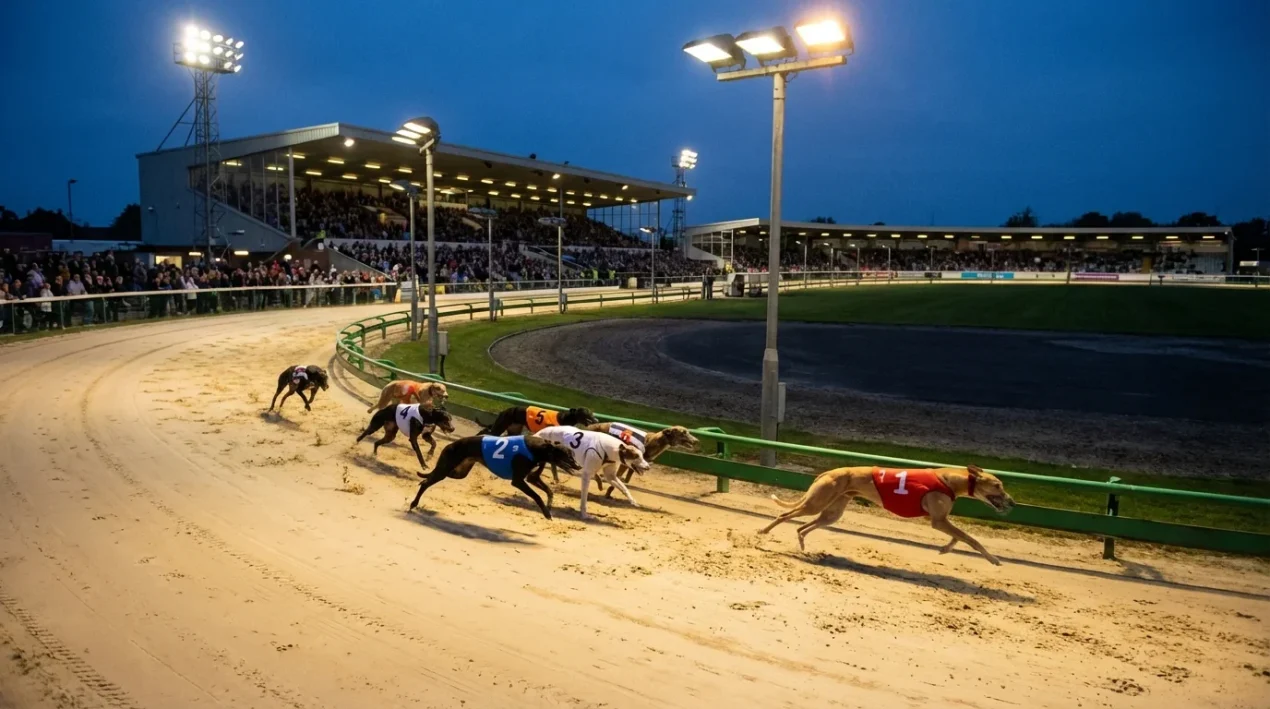
Contents
The Race Within the Race
Greyhound races are won and lost in the first few seconds. The break from the traps, the sprint to the first bend, and the jostling for position as the field enters the corner — these moments determine far more about the final result than anything that happens in the home straight. A dog that leads at the first bend holds an advantage that compounds through the remaining bends and the run to the line. Get more race analysis at greyhoundbettingstrat.
Early speed is the fundamental attribute in greyhound racing. Not just raw speed, but the combination of trap break reaction, initial acceleration, and the tactical sense to claim space on the rail or find a clear run. Dogs with superior early pace win disproportionately because the structure of the race rewards them: fewer obstacles, shorter distance, and the psychological pressure on pursuers who must catch up.
The punter who understands early speed dynamics can read races before they happen. By analysing trap positions, sectional times, and running styles, you build a picture of how the first bend will unfold. That picture is worth more than raw form figures because it addresses causation, not just correlation. Form tells you what happened; early speed analysis tells you why.
First-Bend Statistics and What They Show
Across UK graded racing, dogs that lead at the first bend win approximately sixty percent of races. This figure varies by track, distance, and race type, but the general principle holds everywhere: early lead converts to victory more often than not. The statistic alone justifies focusing on early pace as a primary analytical filter.
Inside traps produce more first-bend leaders. Trap 1 dogs have a shorter path to the rail and can secure the inside position before wider-drawn dogs arrive. At tight tracks with sharp first bends, this advantage is magnified. The combination of trap position and early pace is synergistic: a fast-breaking railer in Trap 1 holds a structural edge that slower breakers from outside traps struggle to overcome.
Sprint races amplify early speed importance. Over short distances — 240 metres at some tracks — there is less time to recover from a slow start or a poor first bend. The dog that leads early often leads throughout. At longer distances, closers have more opportunity to work through the field, reducing but not eliminating the early-pace advantage.
Track configuration affects first-bend dynamics. Tight tracks with sharp bends create more crowding and more interference. Wide tracks with sweeping bends allow multiple dogs to race without significant checking. Knowing how your focus track’s first bend typically plays helps calibrate how much weight to place on early speed analysis for that venue.
First-bend sectional times appear on most racecards and can be compared across a dog’s recent runs. A dog that consistently posts fast first-bend splits is an early-pace type; one with slow first-bend splits but fast overall times is a closer. Both can win, but they win in different ways and under different race conditions.
Assessing Early Pace Before the Race
Building a pace map requires identifying each dog’s early-speed profile and considering how trap draws will interact. Start by reviewing sectional times for each runner. Dogs with consistently fast first-bend splits are pace pressers; those with slow opening splits but strong finishes are closers. Some dogs show inconsistent patterns, breaking well sometimes and slowly others — these are unpredictable and harder to map.
Trap draw modifies natural pace. A fast-breaking dog in Trap 6 may still reach the first bend first, but it covers more ground and faces interference from dogs cutting across. The same dog in Trap 1 has a cleaner path and a shorter journey. Adjust your pace assessment based on draw: a dog’s intrinsic early speed is expressed differently depending on where it starts.
Race comments in form lines help identify pace types. Phrases like led from trap, disputed early, or challenged entering straight indicate dogs that compete for early position. Phrases like ran on, finished well, or never nearer suggest closers that need pace ahead of them to run into. Build a mental or written picture of which dogs want to lead, which will chase, and which will drop out of early contention entirely.
When multiple pace pressers are drawn together, expect trouble. Two dogs both wanting the lead from adjacent traps will bump, crowd, or check each other entering the first bend. This interference often benefits a dog sitting just behind them, able to pick up the pieces as the leaders compromise each other. Identifying likely crowding scenarios is a core skill in pace mapping.
Lone early-speed dogs are valuable. A single confirmed leader with no pace pressure runs its own race unmolested, converting its early advantage into an uncontested lead. These situations create value when the market has not fully recognised the structural advantage of an uncontested front-runner.
Betting Angles Based on Early Speed
The clearest angle is backing the lone front-runner. When your pace analysis identifies a single dog with early-pace credentials and no pressure from other pace types, that dog has a significant edge. Even if its raw form looks only moderate, the race shape favours it. Back it if the price reflects uncertainty that your pace map can resolve.
Opposing crowded pace types works in reverse. If two or three confirmed leaders are drawn near each other and likely to clash at the first bend, all three are vulnerable. Laying one or more of these dogs — particularly if one is the favourite — exploits the expected interference. The race should favour whoever avoids the carnage, which is often a mid-pack dog or a closer.
Closers gain value in races with excessive front-end pace. When several dogs want the lead and will fight for it, the early tempo will be fast and the interference will be significant. A confirmed closer sitting behind this chaos can run past tiring leaders in the straight. Identify these setups by counting pace types and assessing how aggressively each wants the early lead.
Trap-speed combinations create specific value. A fast-breaking dog from an inside trap with no early competition from adjacent traps is ideally placed. A fast breaker from Trap 6 facing inside speed will have to fight for position. The same dog’s value changes dramatically depending on the combination of its own pace, its trap, and the pace of dogs drawn inside it.
The Bend Tells the Story
By the time the field exits the first bend, most races have already been decided in principle. The leader holds the rail and the inside run. Pursuers must go around, covering extra ground and expending extra energy. The checking and crowding that occurred entering the bend has determined which dogs have clean runs and which are fighting through traffic.
Watch replays with the first bend as your primary focus. Note which dogs break well, which dogs check, and which dogs find clean runs despite poor draws. Over time, you will develop a sense of how each dog handles the opening phase, independent of what the form figures show. This knowledge informs future pace maps.
Not every race is readable through pace analysis. Some races feature six dogs with similar early-pace profiles, creating unpredictable scrambles with no clear structural favourite. Other races feature oddly seeded traps that confound typical patterns. Recognise when a pace map offers clarity and when it does not; forcing analysis onto unreadable races produces false confidence. Also read our sectional times guide.
The first bend is where greyhound betting rewards preparation. The punter who maps pace correctly sees the race before it runs, identifies which dogs are helped and which are hindered, and acts on information that casual bettors overlook. That window of insight — between your analysis and the market’s price — is where profit lives.
