
Race Replay Analysis: Video Study for Greyhound Bettors
 Available in US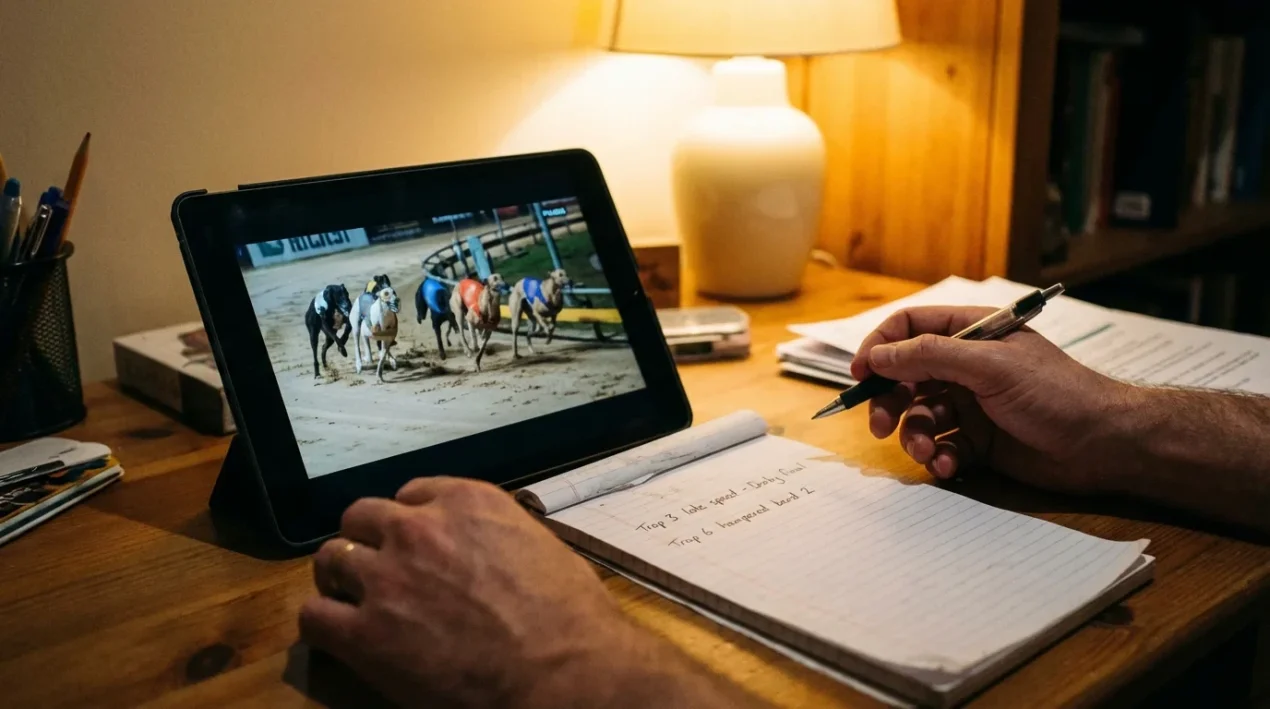
Contents
The Form the Racecard Cannot Show
A racecard tells you a dog finished fourth, beaten three lengths. It does not tell you the dog was knocked sideways at the first bend, lost five lengths, recovered to challenge entering the straight, and only faded in the final twenty metres. The finishing position records the outcome; the replay reveals the story. These are not the same thing. Get more race analysis at greyhoundbettingstrat.
Race replay analysis separates serious greyhound punters from those who bet on numbers alone. Every run has context that the form figures compress into a single digit. Trouble in running, pace scenarios, running style execution, effort levels — all of this is visible in the replay and invisible in the racecard. Punters who watch replays see value that number-readers miss.
Access to replays has never been easier. Track websites, Racing Post, RPGTV, and various apps provide video of recent races from UK tracks. The footage exists; the question is whether you will use it systematically or ignore an information edge that sits freely available.
What to Watch For
The trap break reveals everything about early speed. Watch how each dog leaves the box: reaction time, initial acceleration, and direction. Some dogs break cleanly and directly; others hesitate or angle sideways. The dog that gains two lengths at the break has done work the racecard does not record. Note whether breaks are consistent or variable across a dog’s recent runs.
The first bend is the critical moment. Watch for crowding, checking, bumping, and dogs forced wide. Note which dogs hold their position, which lose ground, and which navigate trouble cleanly. A dog that enters the first bend third and exits fifth has experienced something worth noting. A dog that exits ahead of where it entered has gained on merit.
Running lines matter throughout the race. Rails runners should run on the inside; if forced wide, they are not running their race. Wide runners should have space on the outside; if crowded onto the rail, they are compromised. Watch whether each dog executes its preferred running style or is pushed into an unfamiliar pattern by circumstances.
Effort levels tell you about fitness and readiness. A dog that finishes strongly with ears pricked and head up has more to give. A dog that ties up, starts weaving, or shows signs of distress is at its limit. The replay shows you where in the race each dog reached maximum effort and how it responded beyond that point.
Late-race behaviour reveals character. Some dogs battle when challenged; others surrender. A dog that fights off a challenger to win by a head has shown determination that a dog winning unchallenged has not been asked to demonstrate. Note which dogs respond to pressure and which wilt under it.
Track conditions affect what you see. On a wet track, dogs may slip or struggle for grip at the bends. Watch for signs that a dog disliked the conditions — hesitancy at bends, loss of fluency, reluctance to extend. These observations inform future assessment when similar conditions return.
The Multi-Pass Method
Watch each replay multiple times with different focus points. A single viewing cannot capture everything that matters. Structure your replay study around distinct passes, each targeting specific information.
First pass: overview. Watch the entire race to get the general picture. Note the winner, the pace, and any obvious incidents. This pass establishes context for the detailed work that follows.
Second pass: early race. Focus exclusively on the break and first bend. Pause and rewind as needed. Note which dogs break well, which break poorly, which encounter trouble, and which have clear runs. Ignore the rest of the race during this pass.
Third pass: your selection. If you are analysing a specific dog for betting purposes, dedicate a pass to following only that dog throughout the race. Watch its movement, positioning, effort, and any interference it experiences. Build a complete picture of that dog’s race from start to finish.
Fourth pass: rivals. Follow the main rivals to your selection. Understand their runs in the same detail. This pass reveals whether your selection beat rivals on merit or benefited from their misfortune — and vice versa.
Additional passes as needed. If something unclear remains — did a dog check at the third bend? Was that bump significant? — watch again with focused attention on that specific moment. Do not guess when you can verify.
Building a Notes System
Replay study produces value only if you record what you learn. Watching without notes wastes time — you will not remember the details when you need them. Develop a system for capturing observations in a format you can retrieve later.
Standardise your notation. Create shorthand for common observations: TB for trouble at bend, SW for switched wide, SB for slow break, GE for good effort, WK for weakened, CL for closed strongly. Consistent notation allows rapid recording and easy scanning of historical notes.
Link notes to specific races. Record the date, track, race time, and dog name with each observation. When you encounter the same dog in a future race, you can retrieve your replay notes and add them to the racecard information.
Note running style explicitly. Record whether the dog railed, ran wide, tracked the pace, or led. Note whether this matched its expected style or was forced by circumstances. Patterns of style execution — or deviation from expected style — are valuable form indicators.
Flag dogs for follow-up. When replay study reveals a dog that ran better than its result, mark it for attention in future entries. These horses-for-courses, or in this case dogs-for-courses, situations create value when the market prices the dog on its disappointing finishing position rather than the quality of its run.
Review notes before betting. When assessing a race, pull up your notes on each runner. What did you observe in their recent replays? How does that information adjust your view of the racecard form? The notes are only valuable if you use them.
Watch the Race, See the Truth
Replay analysis is not optional for serious greyhound bettors. The edge it provides — understanding what actually happened rather than just the result — is too significant to ignore. Punters who do this work consistently gain insight that those relying on form figures alone cannot access.
The time investment is real but manageable. Focus your replay study on dogs at your specialised tracks, on races you might bet, and on runners whose form requires explanation. You need not watch every race from every meeting; targeted replay study delivers more value than exhaustive but superficial viewing.
Integrate replay analysis into your pre-race process. Before betting, watch relevant recent replays for your potential selections and their main rivals. Treat the replay as evidence that confirms, challenges, or nuances the story the racecard tells. Also read our sectional times guide.
The racecard is a summary; the replay is the source document. Summaries lose information. Serious analysts go to the source. In greyhound betting, the source is the video of what happened on the track. Watch it, study it, record what you learn, and use it. The dogs run the same race whether you watch the replay or not — but your understanding of what they did changes entirely.
