
UK Greyhound Tracks: Betting Guide to Every Licensed Stadium
 Available in US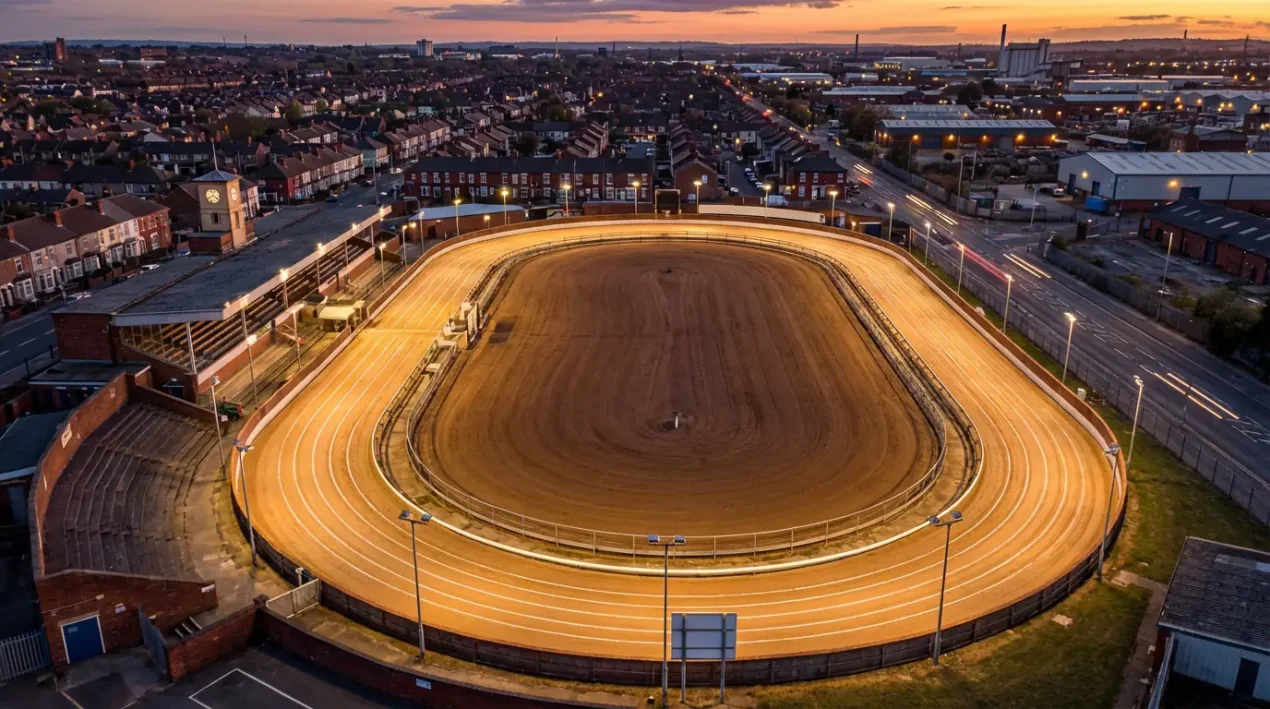
Contents
Eighteen Tracks, Eighteen Different Puzzles
Every track has its own rhythm — learn it or bet blind. The UK currently operates eighteen licensed greyhound stadiums, each with distinct characteristics that influence race outcomes. Circumference, bend tightness, surface composition, distance configurations — these variables combine to create track-specific patterns that punters can exploit or ignore at their peril. Find more track guides at greyhoundbettingstrat.
The mistake most recreational punters make is treating all tracks identically. They apply the same analytical approach to Romford (tight, fast, inner-trap biased) as to Towcester (large, galloping, outer-trap friendly), and wonder why their strike rate fluctuates wildly. The tracks aren’t equivalent. The same dog, from the same trap, running the same nominal distance, faces fundamentally different challenges depending on the track’s geometry.
Understanding track characteristics creates genuine edge because most of the betting public doesn’t bother. They see “480m” and assume all 480-metre races are comparable. They see “Trap 1” and assume inside draws behave identically everywhere. These assumptions are wrong, and their wrongness shows up in the prices. A dog perfectly suited to Nottingham’s long run to the first bend might be systematically overpriced at Crayford, where the run-up is shorter and early pace matters more.
This guide maps the major UK tracks from a betting perspective. The focus isn’t tourist information — how old the stadium is or where to park — but operational intelligence: which traps win disproportionately, which running styles suit the geometry, and which distances favour specific dog types. For each track, the question is the same: what does this circuit reward, and how can that knowledge inform better selections?
The goal isn’t to memorise every stadium. Specialisation matters more than breadth. But understanding what makes tracks different helps you choose which tracks to specialise in, and provides context when you encounter unfamiliar venues. Know the general principles, master one or two tracks deeply, and apply both layers to your betting.
Anatomy of a Greyhound Track: What Matters to Bettors
The physical layout of a track predetermines which running styles will prosper. Before studying individual venues, understand the variables that create their distinct characters. These aren’t arbitrary details — they’re the engineering that produces systematic biases.
Track circumference is the primary variable. UK greyhound tracks range from approximately 334 metres (Crayford) to around 420 metres (Towcester). Smaller circuits have tighter bends, giving inside-drawn dogs a shorter path and creating congestion on the turns. Larger circuits feature more gradual bends, reducing the inside-rail advantage and allowing wide runners more time to recover lost ground.
The practical effect: on tight tracks, Trap 1 and Trap 2 tend to outperform statistical expectation (16.67% win rate for each trap in a fair race). Dogs that break quickly and hug the rail gain a compounding advantage around each bend. On galloping tracks, Trap 5 and Trap 6 perform closer to expectation or even exceed it, because wide runners have racing room to overcome the slightly longer path.
Bend angles matter independently of circumference. A track can have large circumference but still feature sharp turns if the bends are engineered tightly. Sharp bends punish wide runners at the turn point but offer clean running elsewhere. Gradual bends spread the turning effect across a longer arc, reducing instantaneous pressure but requiring sustained pace maintenance.
The run to the first bend — distance from traps to the first turn — shapes early-race dynamics. A long run-up gives fast breakers time to establish position before the congestion point. A short run-up compresses the field, making first-bend crowding more likely and increasing the value of trap draws that provide clear running.
Surface composition affects times and, crucially, wet-weather behaviour. UK tracks use sand surfaces, but sand depth and drainage vary. Tracks with deeper sand produce slower times and tire front-runners more quickly. Tracks with efficient drainage recover faster after rain. Tracks with poor drainage show amplified bias effects when wet — inside traps become disproportionately strong because dogs avoid cutting across waterlogged patches.
Distance configurations determine which dog types suit the track. Every track offers sprint distances (typically 260-280 metres), standard distances (400-500 metres), and usually stayers distances (600-700 metres). Some tracks specialise in middle-distance racing while offering limited sprint or staying options. The distance mix affects which dogs race regularly at each venue and which running styles are rewarded.
Sprint races favour early pace above all. Standard races balance pace with stamina. Stayers races reward dogs that settle early and close strongly. Knowing a track’s distance emphasis tells you which types of dogs succeed there — and which might be undervalued when stepping up or down in trip.
Finally, track condition changes over time. Resurfacing resets historical time comparisons. Weather patterns shift trap biases seasonally. A track’s character in January differs from its character in July, even without physical changes. The punter who monitors these shifts maintains an edge over those relying on outdated assumptions.
Major UK Greyhound Tracks: Betting Profiles
Know your track — here’s the data that matters for each major UK stadium. The profiles below cover the tracks most frequently featured in BAGS and evening racing, where betting volumes are highest. Each profile focuses on betting-relevant characteristics rather than general information.
Sheffield offers one of the larger UK circuits, with a circumference around 425 metres. The track features gradual bends that suit middle-to-wide runners, and Trap 5 historically performs above expectation over standard distances. The 500-metre trip is the signature distance, rewarding dogs with sustained pace rather than explosive breaks. Sheffield’s surface drains well, making it reliable for consistent form reading regardless of weather. Key angle: closers and wide runners find better racing room here than at tighter tracks.
Monmore Green operates a tighter circuit around 390 metres, producing pronounced inside-trap bias. Traps 1 and 2 consistently outperform over sprint distances, and the sharp first bend punishes dogs that break slowly or drift wide. The track hosts regular BAGS meetings and strong evening cards, providing ample data for form study. Monmore rewards dogs with quick trap exits and rail-hugging tendencies. Key angle: oppose wide runners here unless they’re significantly superior on ratings.
Crayford is the tightest major UK circuit at approximately 334 metres, creating extreme inside-trap bias. Trap 1 winners appear well above the expected 16.67% rate, particularly over the sprint trip. The track’s compactness means early pace dominates — dogs caught in traffic at the first bend rarely recover. Crayford is unforgiving to dogs with questionable trap manners. Key angle: prioritise proven fast breakers and be cautious with dogs stepping up from larger circuits.
Hove presents a mid-sized circuit with balanced trap statistics. The track is known for competitive racing and genuine open-race events that attract quality fields. Trap bias exists but is less extreme than at Crayford or Romford. The 500-metre distance is the primary focus, with sprint and stayers races less frequent. Hove form tends to be reliable — what you see on the card typically reflects genuine ability. Key angle: Hove is a strong track for form students because outcomes reflect class rather than trap luck.
Perry Barr hosts some of the UK’s most prestigious events, including rounds of the English Greyhound Derby. The circuit measures around 420 metres, offering wide runners more opportunity than tighter venues. The track’s prestige means fields often contain several high-quality dogs, making competitive race analysis essential. Perry Barr’s surface is well-maintained, producing consistent times that allow meaningful comparisons. Key angle: bigger-race experience matters here — dogs proven in high-grade company outperform step-up runners more often than at everyday tracks.
Towcester is unique in UK racing — a genuine galloping track, with a circumference of approximately 420 metres. Its wide, sweeping bends favour stamina and stride length over trap speed. Wide runners thrive because the gradual bends impose minimal penalty. Trap 6 historically performs above expectation, inverting the usual inside-bias pattern. Key angle: runners with galloping action and proven stamina deserve significant form boosts at Towcester.
Central Park (Sittingbourne) operates a compact circuit that produces inside-trap bias similar to Crayford. Sprint racing dominates the card. The track is less prominent nationally but offers consistent BAGS meetings for regular bettors. Key angle: treat it like other tight tracks — prioritise inside draws and early pace.
Swindon provides a medium-sized circuit with balanced characteristics. The track hosts regular evening racing and attracts solid local trainers. Neither extremely tight nor galloping, Swindon rewards well-rounded dogs without extreme style biases. Key angle: form reliability is high here; Swindon is a good track for straightforward form reading without heavy geometric adjustments.
Romford: Fast Pace, Small Circuit
Romford doesn’t forgive slow starters. The track sits among the tightest in the UK, with a circumference around 350 metres that punishes wide runners and rewards inside-trap draws. Traps 1 and 2 significantly outperform expectation, particularly over the 400-metre standard distance. The short run to the first bend compresses the field, making trap exit speed critical.
The track’s geometry means that dogs checked at the first bend rarely recover. Crowding on the turn creates compound problems — the dog loses lengths at the bend, runs wider to find room, and loses more ground on the tighter path. Strong early pace mitigates this because the dog is clear before congestion develops. Dogs known for mid-pack running styles struggle at Romford unless they possess exceptional finishing speed.
Romford hosts regular BAGS meetings and competitive evening cards, making it a staple for serious greyhound bettors. The volume of racing provides robust data for trap bias analysis. Form at Romford tends to be consistent when dogs are drawn similarly — a Trap 1 win followed by a Trap 1 draw is a repeatable situation. The same dog from Trap 5 is a different proposition entirely.
Key betting approach: weight trap draws heavily, prioritise fast breakers, oppose wide runners even when they carry strong form. When assessing dogs visiting from larger tracks, discount their ratings slightly — the adjustment to Romford’s tightness often costs them positioning they can’t recover.
Nottingham: The Winning Post Factor
At Nottingham, the winning line changes how you read sectionals. The track’s distinctive feature is its finishing post position close to the first bend. This means the early sectional time covers a larger proportion of the race than at other tracks, making first-bend splits particularly informative. Dogs leading at the first timing point at Nottingham are typically leading with more of the race completed than the sectional appears to show.
Nottingham’s circuit is mid-sized with moderate bend sharpness. Trap bias exists but is less extreme than at Crayford or Romford. The track hosts significant open-race meetings, attracting quality fields that reward genuine form analysis over geometric shortcuts. When Nottingham stages category-one events, the racing quality jumps noticeably.
The extended run from the first bend to the finish creates opportunities for closers that other tracks deny. Dogs with strong finishing speed can overturn first-bend deficits because they have more track remaining to make up ground. This dynamic makes Nottingham sectionals particularly valuable — a dog clocking quick closing splits here is demonstrating a usable skill, not just cosmetic finish.
Key betting approach: study sectionals more intensively at Nottingham than elsewhere. The finishing-post position makes split analysis more predictive. Respect closers more than at tight tracks. When comparing Nottingham form to Romford or Crayford form, recognise that closers may seem flattered by their Nottingham results without necessarily being disadvantaged at other tracks — they just need appropriate conditions.
Track Bias Data: Trap Win Percentages Across UK Stadiums
A 20% strike rate for Trap 1 when the expected rate is 16.67% — that’s not noise, that’s signal. Trap bias data quantifies the systematic advantages created by track geometry. In a perfectly neutral six-dog race, each trap would win 16.67% of the time over a large sample. Deviations from this baseline indicate track-induced bias that punters can exploit.
The magnitude of deviation determines exploitability. A trap winning 17% instead of 16.67% might be variance. A trap winning 20% or higher represents a genuine pattern. Over thousands of races, these percentages stabilise into reliable indicators. The key is ensuring your data sample is large enough — at least 500 races, preferably 1,000 — to distinguish signal from noise.
Tight tracks show the most pronounced bias. At Romford and Crayford, Trap 1 historically wins above 20% of sprints. That 3-4 percentage point advantage compounds over time. Backing every Trap 1 runner at these tracks wouldn’t produce profit alone (the market adjusts for known bias), but combining trap advantage with other form factors creates genuine edge. A marginal selection from Trap 1 at Romford deserves more respect than the same selection from Trap 5.
Wider tracks show flatter trap distributions. At Towcester (when racing), trap win rates clustered closer to the 16.67% baseline, with Trap 5 and Trap 6 performing proportionally better than at tight venues. Sheffield and Perry Barr show similar patterns, though less extreme. At these tracks, running style matters more than trap draw — a wide runner from Trap 2 can still succeed if it has room to find its stride.
Weather amplifies existing bias. Wet tracks consistently strengthen inside-trap advantages. Water pools on the surface create sections that dogs avoid, compressing the field toward the rail. Even tracks with moderate dry-weather bias can show extreme inside-bias when wet. Monitor weather forecasts and adjust your trap weighting accordingly. A race card assessed on Tuesday morning might need revision if rain falls Tuesday evening.
Distance interacts with trap bias. Sprint races amplify trap effects because there’s less time for positions to change. In a 265-metre dash, the dog leading at the first bend often leads at the finish — trap draw that helps or hinders the break becomes decisive. Over 680 metres, dogs have multiple bends and extended straights to overcome positional deficits. Trap bias diminishes (though doesn’t disappear) as distance increases.
Graded races versus open races show different patterns. Graded races are seeded — racing managers place dogs in traps partly based on running style to reduce interference. This seeding moderates natural bias somewhat. Open races have less systematic seeding, allowing bias to express more fully. When betting open races, trust the track’s baseline bias more heavily.
Building your own trap bias dataset is valuable because public data may be outdated or methodologically flawed. Track resurfaces, weather patterns change, and historical data includes racing from conditions that no longer apply. A personal dataset covering the last six to twelve months at your chosen track provides more actionable insight than aggregated historical figures.
The practical application is straightforward: know your track’s bias, weight trap draws into your assessments, and adjust for conditions. A dog with every other factor suggesting value but drawn against the bias deserves caution. A marginal selection drawn with the bias deserves elevation. Bias isn’t the only factor, but ignoring it means ignoring free information.
Choosing Your Track: Specialisation as Strategy
Specialise or scatter — only one approach builds the depth of knowledge that creates an edge. The argument for track specialisation is simple: no punter has time to master eighteen tracks. Every hour spent learning Monmore is an hour not spent learning Sheffield. Spreading attention across all tracks produces shallow knowledge everywhere, while concentrating on one or two tracks produces genuine expertise.
Expertise manifests in specific ways. You recognise individual dogs from their previous runs. You know which trainers perform better on wet nights. You remember that Trap 4 at your track won three races last Tuesday when the surface was heavy. You notice when a dog moves to a different kennel because you’ve seen the previous trainer’s runners decline for weeks. This accumulated context creates assessment advantages that occasional observers can’t match.
Choosing your track involves practical and analytical factors. Location matters if you attend live meetings — local knowledge and atmosphere aid judgment. For armchair punters, broadcasting access matters more. BAGS meetings appear throughout the day on betting-shop screens and streaming platforms. Evening meetings at major tracks get more dedicated coverage. Pick a track whose meetings you can watch consistently.
Analytical factors include trap bias clarity and form reliability. Some tracks produce cleaner data than others. Romford’s bias is well-documented and consistent — the same patterns repeat. Other tracks show messier statistics where patterns emerge and fade. Beginners benefit from tracks where the rules are clear and stable.
BAGS meetings versus evening racing presents a choice. BAGS meetings run throughout the day at multiple tracks, offering volume but sometimes weaker fields and less detailed coverage. Evening meetings typically feature stronger cards, better commentary, and more market liquidity. BAGS meetings suit punters who bet frequently and seek volume. Evening meetings suit punters who bet selectively and want quality over quantity.
Many successful punters work a rotation: one track for deep specialisation, a second track for variety when the primary track doesn’t race or offers weak cards. This structure maintains expertise while avoiding over-reliance on a single venue’s schedule. Two tracks provide sufficient action without diluting knowledge excessively.
Building local knowledge takes time. Allow three to six months of observation before expecting expertise to translate into edge. Record everything: trap performance by distance, trainer strike rates, individual dog notes, weather effects. The database you build becomes your competitive advantage. Other punters are looking at the same public form data — your private observations differentiate your assessments.
Resist the temptation to expand prematurely. When your primary track has no racing, the urge to bet elsewhere intensifies. Discipline means accepting that no-value days exist. Betting at an unfamiliar track because your track has no action usually means betting without edge. The accumulated profit from disciplined specialisation exceeds the scattered losses from uninformed dabbling.
Your Track, Your Rules
One track, studied deeply, is worth more than twenty tracks skimmed. This principle underlies everything discussed in this guide. The punter who knows Monmore on a wet Tuesday will outperform the one who knows a little about every track. Knowledge depth, not breadth, creates advantage in greyhound betting.
Track knowledge is a form of ownership. The track you’ve studied belongs to you in a way that public form data belongs to everyone. You know its quirks, its patterns, its exceptions. You remember the dog that always runs wide at the second bend, the trainer whose runners improve after a week’s rest, the trap that underperforms when the wind blows from the north. These details sit outside the racecard, invisible to casual observers, visible only to those who’ve invested time.
The investment compounds. Every race you watch adds to your database. Every result confirms or challenges your hypotheses. Over months, your mental model of the track becomes sophisticated — not just trap bias percentages, but contextual understanding of how bias interacts with specific dog types, weather conditions, and race grades. This sophistication can’t be purchased or shortcut. It emerges from attention.
Eighteen tracks operate in the UK, and most punters treat them interchangeably. They bet wherever the next race happens, applying generic methods to specific circumstances. Their results reflect the approach: occasional wins, systematic leakage, no cumulative edge. The alternative — specialisation, patience, expertise — demands more initially but delivers more ultimately.
Choose your track. Learn its rhythms. Build your database. Accept that other tracks exist but aren’t your concern. Let other punters scatter their attention across venues they barely understand. Your edge comes from knowing one track better than the market does, and betting only when that knowledge gives you advantage. Also read our greyhound trap bias guide.
The track doesn’t reward enthusiasm. It rewards expertise. And expertise, by definition, is narrow. The punter who knows everything about greyhound racing knows nothing useful about any particular track. The punter who knows nothing about fourteen tracks but knows everything about one has an edge that compounds race by race, week by week, month by month.
