
Weather and Track Conditions in Greyhound Racing
 Available in US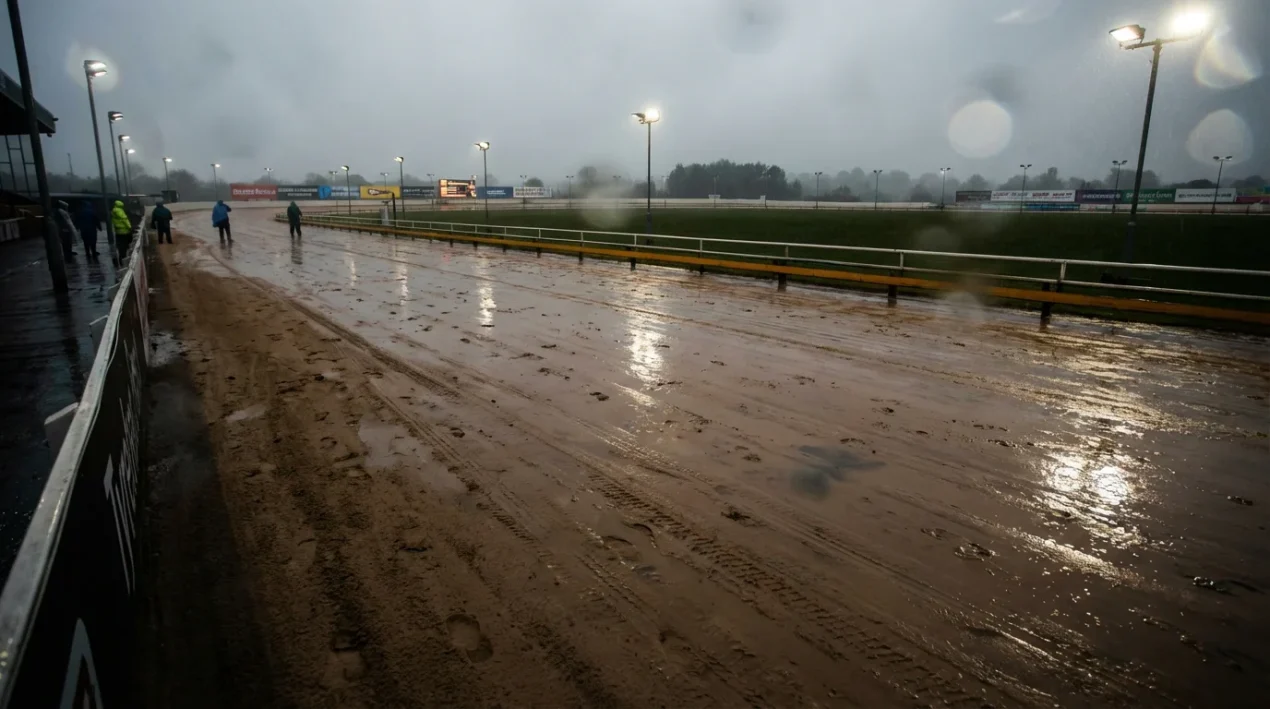
Contents
The Surface Under Their Feet Changes Everything
Greyhound racing in the UK takes place exclusively outdoors, on sand-based tracks that respond directly to whatever the British weather decides to do on any given evening. That makes weather not an incidental factor in race outcomes but a central one — a variable that shifts the competitive balance between dogs, alters trap biases, and changes the speed of the racing surface from one meeting to the next. Get more race analysis at greyhoundbettingstrat.
Every UK licensed track uses sand as its primary racing surface, but the composition, depth, drainage quality, and maintenance regime differ between stadiums. A track with excellent drainage might race on a near-fast surface within an hour of heavy rain. Another with older infrastructure might hold water for the entire meeting, producing a slow, heavy surface that transforms the form book. For punters, this means weather awareness isn’t optional — it’s the first thing you should check before looking at a single racecard.
The practical challenge is that weather affects different dogs differently. A front runner with blistering early speed might dominate on a fast, dry surface but struggle to maintain its advantage on a rain-softened track where the going saps its initial burst. A stayer with stamina but modest pace might be ordinary in dry conditions but transformed when the surface demands endurance over raw speed. Knowing which dogs handle which conditions — and recognising when conditions have shifted — is a genuine edge in greyhound form assessment.
Wet Versus Dry: How Rain Reshapes the Race
Rain is the single biggest weather variable in UK greyhound racing, and its effects cascade through every aspect of a race. On a dry track, the sand is firm and consistent. Dogs grip well, times are fast, and the form book tends to be reliable. The fastest dog on paper usually is the fastest dog on the track. Racing on a dry surface rewards speed and early pace above all else.
Introduce sustained rain, and the dynamics shift. The sand absorbs water unevenly — areas near the inside rail, which receive more foot traffic from dogs and which sit lower on the cambered track surface, often become heavier faster. The result is a slower racing line on the inside, which can reduce or even reverse the usual inside-trap advantage. Dogs that typically save ground on the rail suddenly find themselves running through deeper, heavier sand, while those on the outside — where the surface may be firmer and less churned — get a comparatively better run.
Heavier dogs tend to cope better in wet conditions. A bigger frame distributes its weight more effectively across the softer surface, whereas lighter dogs can sink slightly with each stride, losing fractions of a second that compound over the course of a race. This doesn’t mean heavy dogs always win in the rain, but it does mean that weight becomes a relevant factor that it simply isn’t on a dry surface. Some racecards list the dog’s racing weight; if yours does, note it and cross-reference with the going conditions.
The other major wet-weather effect is on the bends. Wet sand offers less lateral grip, which means dogs that rely on tight cornering — railers especially — can lose their footing or slide wide through the turns. Wide runners, who take a more gradual line through the bends, are less affected because they’re not fighting for grip at the same acute angle. If you notice the first few races of a rain-affected meeting producing wide-drawn winners or dogs that usually run wide, you’re seeing this effect in action.
For betting purposes, the key moment is the transition. When a meeting starts dry and rain arrives mid-card, the first race run on the changed surface is the least predictable. The market is still pricing dogs based on dry-track form, but the race will be run on a wet surface. That mismatch between market pricing and actual racing conditions is one of the more reliable sources of value in greyhound betting. By the time the market adjusts — usually two or three races into the changed conditions — the mispricing window has closed.
Wind, Temperature, and Other Atmospheric Factors
Wind is underestimated by most greyhound punters because its effects are subtle but real. A strong headwind on the back straight slows front runners who are battling it for a longer period, giving closers a relative advantage as the leaders tire. A tailwind on the home straight, by contrast, helps every dog equally and tends to produce faster overall times without significantly changing the competitive dynamic.
Crosswinds are more interesting. At tracks where the home straight runs perpendicular to the prevailing wind direction, a strong crosswind can push dogs laterally, making wide runners drift wider and railers struggle to hold their line. The effects are marginal in most cases, but at exposed tracks with minimal wind shelter — some BAGS venues in particular — they’re worth noting.
Temperature plays a role primarily through its effect on the track surface. Hot, dry weather bakes the sand hard, producing fast times and favouring speed-oriented dogs. Cold weather doesn’t dramatically change the surface unless accompanied by frost, which can make the sand icy and unpredictable. UK racing is rarely cancelled for temperature alone, but when early-evening meetings run on frost-affected surfaces, the going is atypically firm and the grip can be unreliable — conditions that produce more upsets than normal.
Humidity is the least discussed atmospheric variable but arguably the most insidious. High humidity — common on summer evenings — makes it harder for dogs to regulate their body temperature during exertion. Dogs running in their second or third race of the evening at a humid meeting may tire more quickly than their form suggests, particularly over middle and stayers distances where sustained effort is required. It’s a marginal effect, but in competitive graded racing, marginal effects decide margins.
Reading Conditions Before You Read Form
The practical routine for incorporating weather into your greyhound betting is simpler than the analysis might suggest. Before you study the racecard for any meeting, check three things: the current weather at the track, the forecast for the duration of the meeting, and whether there’s been significant rainfall in the preceding hours.
Most racecourses and major greyhound data sites publish a going report for each meeting, ranging from fast through standard to slow. These reports are a useful starting point but they’re snapshots — they describe the surface at the time of assessment, which might be two hours before the first race. If rain is forecast during the meeting, the going will change, and the early-meeting report becomes outdated. Supplement official going reports with live weather data and your own observations from the first few races.
Build a simple reference for each dog you follow: does it have winning form on a wet surface? Has it ever been beaten on a heavy track when it should have won? Does its running style (railer, wide runner) make it more or less vulnerable to wet-weather surface changes? Over time, this weather-form matrix becomes one of the most practically useful tools in your form notebook. The weather isn’t going to change because you’re watching. But how you interpret the form can change when you account for the conditions under which that form was achieved. Also read our greyhound trap bias guide.
The dogs that produce their best form in the worst conditions are the ones the market most consistently undervalues. When the rain falls and the majority of punters stick with the form picks regardless, the punter who knows which dogs thrive in the wet has a genuine, measurable, and recurring edge. British weather being what it is, that edge presents itself far more often than most people realise.
