Greyhound Forecast Bets: How to Pick First and Second
 Available in US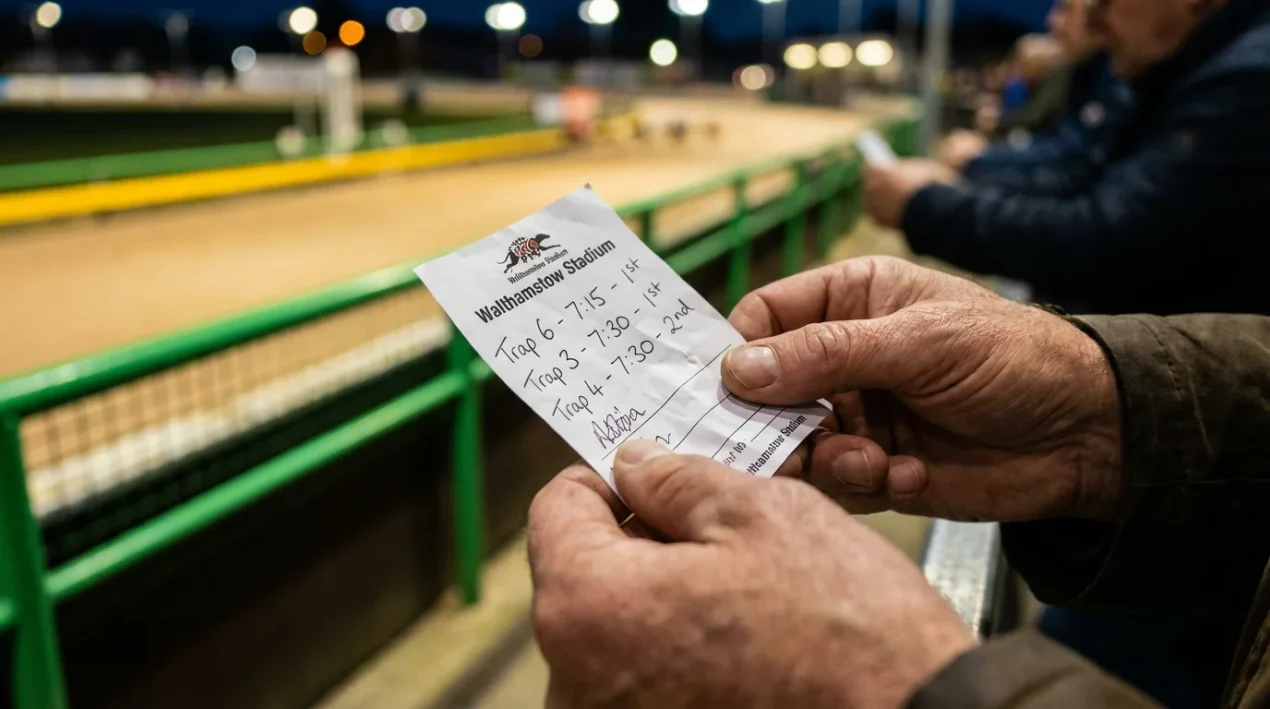
Contents
Forecasts Turn Small Fields Into Big Payouts
In a six-dog field, there are thirty possible ways the first two places can be filled. That’s the competitive landscape of the straight forecast — a bet that asks you to name the exact first and second in the correct order. It’s harder than picking a winner, obviously, but the payouts reflect the difficulty, and in greyhound racing, the small field sizes make forecasts considerably more approachable than their horse racing equivalents. Find more bet type guides at greyhoundbettingstrat.
Forecast betting sits in the sweet spot between the simplicity of a win bet and the extreme difficulty of a tricast. You need to form a view on two dogs rather than one, which requires deeper race analysis but rewards it with significantly better returns. For punters who are confident in their form reading and race-shape assessment, the forecast market is where greyhound betting starts to get genuinely interesting.
The mechanics are straightforward. A straight forecast requires Dog A to finish first and Dog B to finish second, in that exact order. Get the order wrong and the bet loses, even if both dogs place. This is the purest form of forecast betting: precise, binary, and unforgiving. But it’s also the version that produces the best dividends when you get it right, because you’re taking on more risk than someone who hedges with a reverse or combination forecast.
Straight Forecast: Exact Order, Maximum Return
The straight forecast dividend is calculated using the Computer Straight Forecast formula — a mathematical model administered by the industry that generates a fair payout based on the starting prices of the first two finishers. Unlike fixed-odds betting, where your return is locked in at the time of placement, the CSF payout is determined after the race based on the final market positions of the two dogs. This means you don’t know your exact return until the result is declared.
In practice, CSF dividends in greyhound racing range from a few pounds for a combination of two short-priced favourites to several hundred pounds when an outsider is involved. The typical useful range for strategic forecast betting is when your predicted first and second are priced between 2/1 and 8/1. At those odds, the forecast payout offers a meaningful multiple of your stake without requiring a complete outsider to oblige.
The analytical approach to straight forecast betting begins with the same form assessment you’d use for a win bet, but extended to two selections. First, identify the dog you believe is most likely to win the race — considering form, trap draw, running style, and race conditions. Then identify the dog most likely to finish second given that your first pick wins. This second step is where the analysis gets nuanced. It’s not simply the second-best dog in the race on overall form. It’s the dog most likely to fill second place given the specific race shape that your predicted winner would create.
For example, if your predicted winner is a front runner from Trap 1, the dog most likely to finish second isn’t necessarily the next-fastest dog. It’s the dog best positioned to run into the space behind the leader — perhaps a middle runner from Trap 3 that benefits from the clear rail in front of it once the leader has established position. Race-shape thinking, not just raw ability, drives profitable forecast selections.
Straight forecasts work best in races with a clear form standout for the win and two or three plausible candidates for second place. If you can identify the likely winner with high confidence but the second place is genuinely open, a single straight forecast with your best pick for second gives you a targeted, high-value bet. If you’re less sure about the order but confident about the two dogs placing, that’s where the reverse forecast comes in.
Reverse Forecast: Both Orders Covered
A reverse forecast is simply two straight forecasts combined into one bet. You select Dog A and Dog B, and the bet covers both A-first-B-second and B-first-A-second. Since it’s two bets, your stake is doubled — a £1 reverse forecast costs £2 — but you win as long as your two selections finish first and second in either order.
The trade-off is obvious: lower risk, lower return per unit staked. But the reverse forecast removes the need to predict the exact finishing order, which is the hardest part of forecast betting. In greyhound racing, where the difference between first and second is often less than a length, the inability to predict exact order with consistency makes reverse forecasts a pragmatic choice for most punters.
The reverse forecast is most useful when your analysis identifies two dogs that stand clearly above the rest of the field but you can’t separate them. Perhaps both have similar form, complementary running styles that won’t cause interference with each other, and favourable draws. In those situations, arguing about which one will finish a nose in front of the other is an exercise in false precision. The reverse forecast lets you profit from the correct identification of the top two without getting tangled in an order prediction you can’t substantiate.
One tactical note: check whether the reverse forecast payout offers better value than two separate win bets on the same dogs. In races where two dogs are heavily fancied, the CSF dividend can sometimes be lower than the combined return you’d get from two well-placed win singles. It doesn’t happen often, but when it does, the win bets are the smarter play. Compare before you commit.
Combination Forecast: Wider Coverage, Higher Cost
Combination forecasts extend the principle further. Instead of selecting two dogs, you select three or more and cover every possible first-and-second combination between them. With three dogs, that’s six straight forecasts (three pairs, each in two orders). With four dogs, it’s twelve. The coverage increases rapidly, and so does the cost.
The appeal is obvious: you’re hedging against the uncertainty of a single-pair prediction by covering more contingencies. In a race where the top three dogs are closely matched and any of them could realistically finish in the first two places, a three-dog combination forecast gives you six chances to hit the dividend. If one of those pairings produces a CSF of £30 or more, the overall return comfortably exceeds the £6 stake.
The risk is dilution. As you add more dogs to the combination, your per-bet stake shrinks relative to the total outlay, and the proportion of losing forecasts within the combination increases. A four-dog combination at £1 per unit costs £12. If the winning forecast returns £15, you’ve made £3 profit — a marginal return for the complexity and risk involved. Combination forecasts work when the expected dividends are high enough to justify the coverage cost, and that typically means including at least one dog priced at 4/1 or longer.
The strategic discipline with combinations is knowing when to stop adding dogs. Every extra selection increases your coverage but reduces your return on investment. Three-dog combinations are the sweet spot for most greyhound races. Four-dog combinations are occasionally justified in truly open races where form gives no clear steer. Anything beyond four dogs in a six-runner field is essentially trying to cover the entire race, which defeats the purpose of forecast betting — you might as well bet on the Tote pool at that point.
In races with a clear class standout, combination forecasts are less effective because the favourite will be involved in the winning forecast at short odds, dragging the CSF dividend down. Combinations perform best in competitive, open races where no single dog dominates the market — precisely the conditions where getting the exact order right on a straight forecast would be largely a matter of luck.
When the Forecast Pays Better Than the Win
Every experienced greyhound punter eventually reaches the same conclusion: in certain race types, forecast betting offers structurally better value than win betting. The reason is mathematical. In a six-dog race with two clear contenders, the win market for each of those dogs is typically compressed — odds of 2/1 or shorter. The forecast market, however, prices the exact-order finish, which is significantly less certain. The CSF dividend for two 2/1 shots finishing first and second is often in the range of £8 to £12 from a £1 stake — a substantially better payout than the win return from either selection alone.
This value gap is most pronounced in races where you’re confident about which two dogs will fill the first two places but the market has them at relatively short win prices. Rather than backing one of them to win at cramped odds, a reverse forecast on the pair gives you exposure to the outcome you believe is most likely at a better effective price. Also read our greyhound tricast betting.
The forecast market is also where contrarian views pay off most handsomely. If you believe an outsider priced at 8/1 will run into the places behind a well-fancied favourite, a straight forecast of favourite-first, outsider-second can return multiples of what a simple place bet on the outsider would deliver. The forecast rewards specificity, and specificity rewards homework. The punter who can consistently narrow the field to two likely place-fillers — and is right even half the time — will find forecast betting more profitable than any other market in greyhound racing.
