Greyhound Tricast Betting: Predicting the Top Three
 Available in US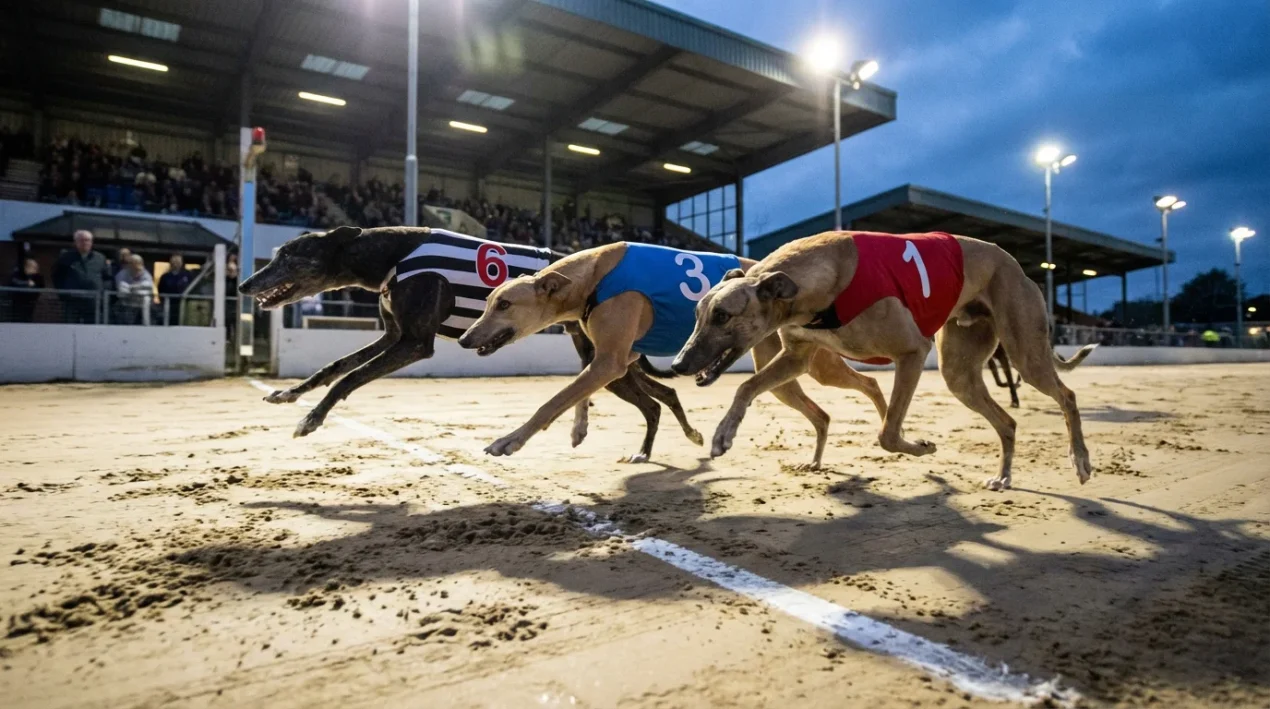
Contents
One Hundred and Twenty Outcomes, One Correct Answer
The tricast is the sharpest-edged bet in greyhound racing. Pick the first three dogs home in the exact finishing order from a six-runner field, and the payout reflects the difficulty — often dramatically so. Where a forecast involves thirty possible permutations of first and second, the tricast multiplies that to one hundred and twenty. That’s the number of ways six dogs can finish in the first three positions in order. You need to be right about all three. Find more bet type guides at greyhoundbettingstrat.
That sounds daunting, and it should. The tricast isn’t a casual bet. It’s a precision wager that rewards deep form knowledge, accurate race-shape prediction, and the discipline to accept that most tricast bets will lose. The compensation for that high failure rate is payout size. Tricast dividends in greyhound racing regularly reach three figures from a one-pound stake, and four-figure returns — while uncommon — are not the unicorn events they would be in a larger-field sport like horse racing.
The six-dog field is what makes greyhound tricasts viable. In horse racing, predicting the exact first three from a field of fourteen runners is an exercise in hope. In greyhound racing, with only six runners and a much more constrained set of race dynamics, the analysis can meaningfully narrow the field. A punter who can confidently eliminate two dogs from contention for a top-three finish has reduced the problem from one hundred and twenty permutations to twenty-four. That’s a substantial improvement in the odds of success.
How the Tricast Works
A straight tricast requires you to name the first, second, and third finishers in exact order. Like the forecast, the payout is determined after the race using a computer-generated formula — the Computer Tricast — based on the starting prices of the three placed dogs. There are no fixed odds to accept at the point of placement. You stake your money and the dividend is calculated once the result is confirmed.
The computer tricast formula weights the payout based on the implied probability of the exact finishing combination. If three short-priced dogs fill the first three places in the expected order, the dividend will be modest — perhaps £20 to £40 from a £1 stake. If an outsider finishes in the top three, the dividend rises sharply. A combination of two fancied dogs and one longer-priced runner can easily produce a dividend north of £100, and when two of the three placed dogs are outsiders, the returns can be spectacular.
Most bookmakers accept tricast bets on all six-runner greyhound races at UK licensed tracks. The minimum stake varies but is typically as low as 10p or 20p per line, making it accessible even for punters on modest bankrolls. This low entry point is part of the tricast’s appeal — you can take multiple stabs at different combinations within a single race for the price of one standard win bet.
One detail that trips up less experienced bettors: the tricast only pays if your three selections finish in the exact order you specified. Dog A first, Dog B second, Dog C third. If A wins but B and C swap places, a straight tricast on A-B-C loses. The result you were almost right about pays nothing. This all-or-nothing structure is what drives the larger dividends but also what makes the straight tricast a high-variance proposition.
The tricast also requires a minimum of three runners to finish the race. If a dog is a non-runner before the off, the race may be reduced to five runners, and tricast betting is typically voided or adjusted according to the bookmaker’s rules. Always check the specific terms — particularly in BAGS meetings where late withdrawals are more common.
Combination Tricast: Covering More Ground
The combination tricast addresses the order problem by covering every possible permutation of your selected dogs in the first three places. If you select three dogs — A, B, and C — a combination tricast covers all six possible finishing orders: A-B-C, A-C-B, B-A-C, B-C-A, C-A-B, C-B-A. Your stake is multiplied by six, but you win regardless of the order in which your three selections finish, as long as they fill the first three places.
With four selections, the number of covered permutations rises to twenty-four. With five selections from a six-runner field, you’re covering sixty permutations — at which point you’re essentially betting that the one dog you’ve excluded won’t finish in the top three. That can actually be a smart play if there’s a clearly exposed dog in the field, but the cost of sixty units makes it viable only when the expected dividend is high enough to justify the outlay.
The three-dog combination tricast is the most common and most practical version. At £1 per line, it costs £6 — a reasonable investment if the expected Computer Tricast dividend for that particular combination is in the range of £30 or higher. Below that threshold, the risk-to-reward ratio becomes unfavourable. You’re paying £6 for the chance to win £20 or £25, with a relatively low probability of your three dogs actually filling the first three places.
Four-dog combinations work in genuinely open races where form analysis can’t separate the contenders clearly. At £1 per line, the cost is £24 — a significant outlay for a single race. But if the winning combination involves an outsider and the Computer Tricast dividend hits £150 or more, the return comfortably justifies the stake. The key is selectivity: combination tricasts should be reserved for races where the analysis supports genuine uncertainty about the order, not used as a scatter-gun approach to every race on the card.
Tricast Strategy for Greyhound Racing
Profitable tricast betting starts with a deceptively simple question: which dogs can I eliminate? In a six-dog race, if you can confidently rule out two dogs from finishing in the top three, you’ve narrowed the tricast to four contenders and twenty-four permutations. If you can rule out three, you’re left with the three likely place-fillers and just six permutations — the basic combination tricast.
The elimination process draws on every analytical tool available. Dogs drawn against their running style are candidates for exclusion. Dogs stepping up a grade for the first time face tougher opposition and may not place. Dogs returning from a layoff or with questionable recent form are vulnerable. Dogs with a known dislike of the current weather conditions can be downgraded. Each elimination increases the probability that your remaining selections will fill the places.
Race type matters significantly for tricast viability. Graded races, where the six dogs are supposed to be evenly matched, tend to produce more open results and higher tricast dividends. Open races, where one or two dogs are clearly superior, tend to produce lower dividends because the favourites usually fill the top places. The best tricast opportunities are in mid-grade races — A4 to A7 at most tracks — where the form differences between runners are small enough to create genuine uncertainty about the exact finishing order.
Bankroll discipline is non-negotiable with tricast betting. The strike rate for straight tricasts is inherently low — even a skilled analyst might hit one in eight to ten attempts. Combination tricasts improve the strike rate but at the cost of higher outlay per bet. The practical approach is to allocate a fixed, small portion of your total betting bank to tricast bets (no more than five to ten percent), treat them as supplementary to your core win and forecast activity, and resist the temptation to increase stakes after a near-miss. The near-miss is the tricast bettor’s most dangerous enemy — it feels like you were close, but in exact-order betting, close pays the same as completely wrong. Also read our greyhound forecast bets.
The Last Length Decides Everything
The tricast is the most honest bet in greyhound racing. It doesn’t reward vague opinions or general impressions. It rewards precise analysis, specific predictions, and the willingness to accept a high failure rate in exchange for occasional large returns. There’s no way to consistently predict the exact first three in order — the sport is too chaotic, and the margins too fine. But you can consistently put yourself in a position where your analysis narrows the field, your combinations are structured efficiently, and the expected payout justifies the risk. That’s the discipline. The last length of every race — the margin that separates the tricast winner from the tricast loser — is beyond anyone’s control. Everything before that length is yours to study.
