Greyhound Sprint Race Betting: Short-Distance Strategy
 Available in US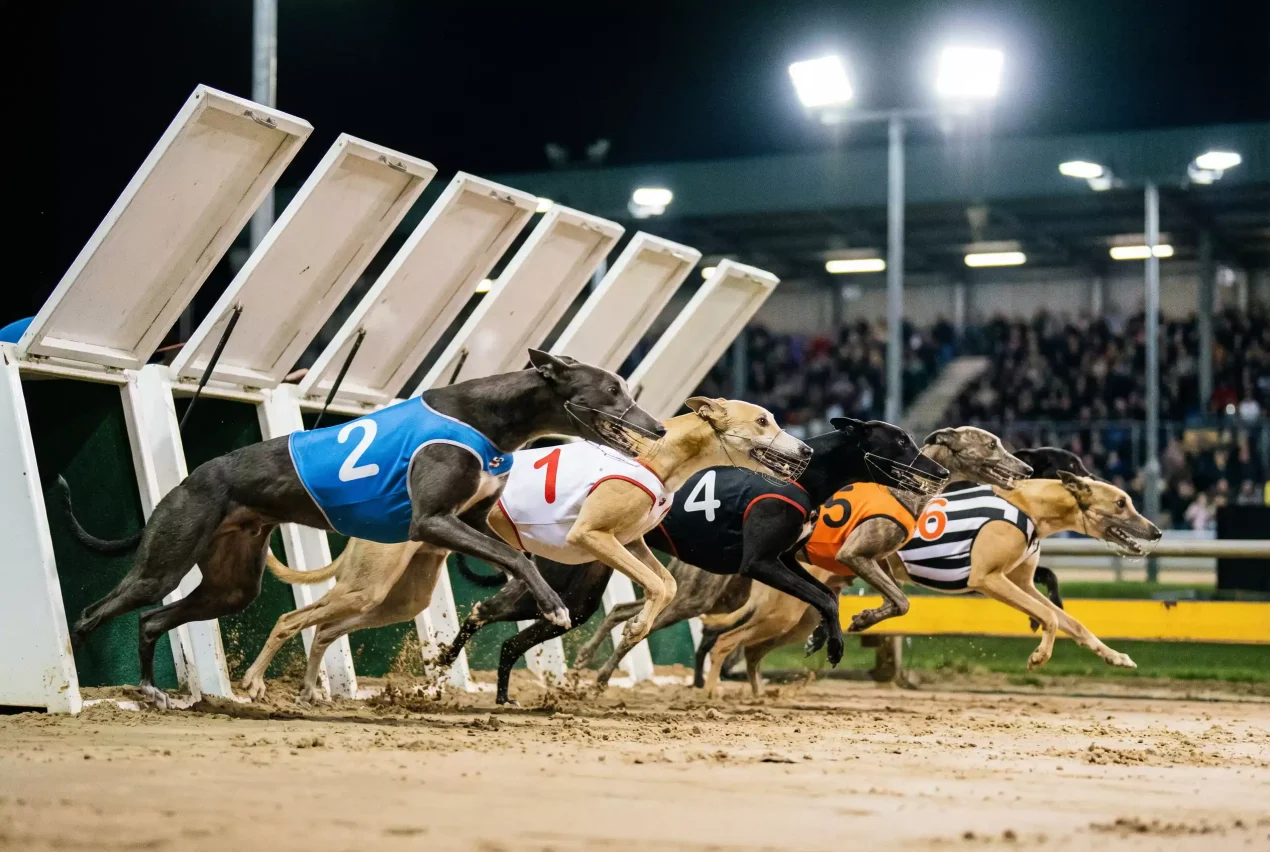
Contents
When Seconds Become Everything
Sprint races strip greyhound racing to its essence. Over distances of 240 to 280 metres, there is no time to recover from a slow start, no room to work through traffic, and no opportunity for stamina to override speed. The dog that breaks fastest and reaches the first bend in front usually wins. Everything else is noise. Find more strategy guides at greyhoundbettingstrat.
This simplicity makes sprints both easier and harder to analyse. Easier because fewer variables matter — trap break and early pace dominate. Harder because margins are tiny, and small errors in assessment produce large errors in outcome. A dog that breaks a tenth of a second slower than expected can lose a race it should have won.
Sprints attract a specific type of greyhound. These dogs are built for explosive acceleration rather than sustained running. They tend to be lighter, more reactive at the traps, and less concerned with conserving energy. Understanding what makes a successful sprinter — and how to identify one on the racecard — is the foundation of sprint betting strategy.
What Makes Sprint Racing Different
Sprint distances at UK tracks typically range from 240 metres to 285 metres. At these distances, races last roughly fifteen seconds. The mechanical hare passes the traps, the lids fly open, and within a handful of strides the shape of the race is determined. By the time dogs reach the first bend — if there even is a bend at some sprint configurations — the leader has established a gap that rarely closes.
Track configuration affects sprint races significantly. Some tracks run sprints entirely on the straight, eliminating bends altogether. Others include one bend, which introduces crowding but still favours early speed. The specific sprint distance and layout at your focus track determines which factors matter most.
Closers struggle in sprints. A dog whose style involves settling behind early pace and running on in the closing stages needs time and distance to execute that pattern. Over 240 metres, there is no closing stage — the race is over before the closer can engage. Sprint fields favour front-runners who can establish position immediately and maintain it to the line.
Trap draw influence intensifies in sprints. Over longer distances, a poor trap draw can be overcome through superior ability or tactical racing. Over sprint distances, an inside trap advantage may prove insurmountable. The dog in Trap 1 reaches the rail first; the dog in Trap 6 must cover extra ground from the first stride. In a race lasting fifteen seconds, that extra ground is not recoverable.
Weight matters more at sprint distances. Lighter dogs accelerate faster out of the traps. A sprinter carrying an extra kilogram faces a meaningful disadvantage in the initial burst that defines the race. Check weights carefully when assessing sprint contenders; increases from recent runs deserve scrutiny.
Trap Speed Is King
The single most important factor in sprint betting is trap speed — how quickly a dog breaks from the starting trap and accelerates to racing pace. A dog with superior trap speed from a favourable draw is difficult to beat regardless of what the form figures say about its overall ability.
Assessing trap speed requires looking beyond finishing times. The sectional time to the first timing point — typically the first bend or an early split marker — reveals which dogs accelerate fastest. Compare these early sectionals across a dog’s recent runs. Consistent fast early splits indicate reliable trap speed; inconsistent splits suggest a dog that breaks well sometimes but not always.
Race comments provide qualitative support. Phrases like flew traps, blistering break, or led from box indicate confirmed early pace. Conversely, slow away, dwelt, or missed break flag dogs whose trap speed is unreliable. In sprint racing, unreliable trap speed is a serious flaw — one poor break and the race is lost.
The interaction between trap speed and trap position creates the core sprint analysis. A fast breaker in Trap 1 has an almost structural advantage: quick out, short path to the rail, and early control of the race. The same dog in Trap 6 must break even faster to overcome the extra ground. A moderate trap breaker in Trap 1 may beat a faster breaker in Trap 6 simply through positional advantage.
Watch for trap speed mismatches. If one dog has demonstrably faster early pace than its rivals, and that dog is drawn inside those rivals, the race shape strongly favours it. If two fast breakers are drawn side by side, expect crowding that may benefit a third dog with a clean run.
Sprint-Specific Betting Angles
The lone early-pace angle applies with particular force in sprints. Identify races where only one dog shows confirmed fast trap speed. That dog, especially from an inside trap, has a significant edge. The market often undervalues this structural advantage, pricing the dog based on overall ability rather than sprint-specific factors.
Opposing closers in sprint races offers consistent value. Dogs whose form shows run-on comments or strong finishing sectionals but slow early splits are poorly suited to sprint distances. The market may price them based on their middle-distance form without discounting appropriately for the sprint context. Laying or excluding these dogs tightens your field analysis.
First-time sprinters warrant scrutiny. A dog dropping from 480 metres to 265 metres is trying something new. Some dogs adapt well — their natural speed translates to sprint success. Others struggle with the intensity and tactical demands. Without sprint-specific form to assess, these dogs are risky selections. Consider opposing them until they prove themselves at the distance.
Track-specific sprint bias deserves attention. Some tracks produce sprint results that heavily favour inside traps; others are more balanced. Knowing your track’s sprint bias — which traps win disproportionately, how often leaders hold on, whether any trap produces unexpectedly good sprint results — allows you to calibrate your analysis accordingly.
Weather affects sprints less than longer races but still matters. Wet conditions can slow initial acceleration, reducing the advantage of pure trap speed. In the rain, dogs with slightly slower breaks but better balance through wet ground may outperform their dry-track equivalents.
Fast Dogs, Fast Decisions
Sprint betting rewards decisive analysis. The factors that matter are few and identifiable: trap speed, trap draw, and the interaction between them. Dogs that break fast from inside traps win disproportionately. Dogs that break slowly or need distance to find their stride lose disproportionately. The rest is detail.
Resist the temptation to overcomplicate sprint analysis. At longer distances, considerations like stamina, finishing speed, and tactical flexibility matter. Over 250 metres, they barely register. A dog’s ability to break fast and reach the first bend in front overwhelms almost everything else.
Build your sprint assessment around early sectionals and trap draw. Compare the dogs’ first-split times from recent runs. Identify which dogs have the fastest splits and which have the most favourable draws. When these align — the fastest breaker from the best trap — you have your likely winner. When they conflict, the race becomes more difficult to read and potentially more suitable for Dutching or passing entirely. Also read our greyhound stayers strategy.
Sprints offer a specialised niche within greyhound betting. Punters who understand the compressed dynamics can find value that those applying general principles miss. The races are short, the margins are tight, and the decisive moments happen in the first few strides. Master the trap break, and you master the sprint.
